
Under the patronage of Sheikh Abdullah bin Zayed Al Nahyan, Deputy Prime Minister and Minister of Foreign Affairs, a major international symposium titled “Sultan Al Owais… A Journey of Poetry… A Journey of Giving”, kicked off on Thursday, 11 September 2025.
Organised by the Sultan Bin Ali Al Owais Cultural Foundation in collaboration with the United Nations Educational, Scientific and Cultural Organization (UNESCO), the two-day event marks the centenary of the late poet Sultan Bin Ali Al Owais (1925–2025).
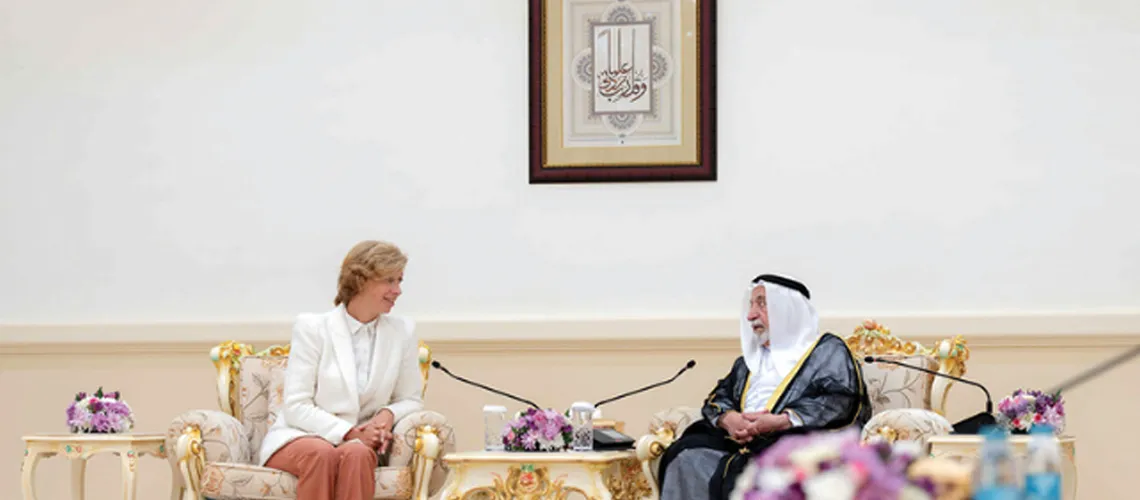
The symposium was attended by Her Excellency Noura bint Mohammed Al Kaabi, Minister of State at the Ministry of Foreign Affairs; His Excellency Fahad Saeed Al Raqbani, UAE Ambassador to France; His Excellency Ernesto Ottone Ramirez, UNESCO Assistant Director-General for Culture; His Excellency Dr. Sulaiman Mousa Al Jassim, Vice Chairman of the Board of Trustees of the Sultan Bin Ali Al Owais Cultural Foundation; and His Excellency Ali Al Haj Al Ali, UAE Permanent Delegate to UNESCO and Chair of the Arab Group. Present also were His Excellency Abdul Hamid Ahmad, Secretary General of the Al Owais Foundation, alongside several heads of permanent international delegations to UNESCO, distinguished intellectuals, writers, public figures, and media professionals.
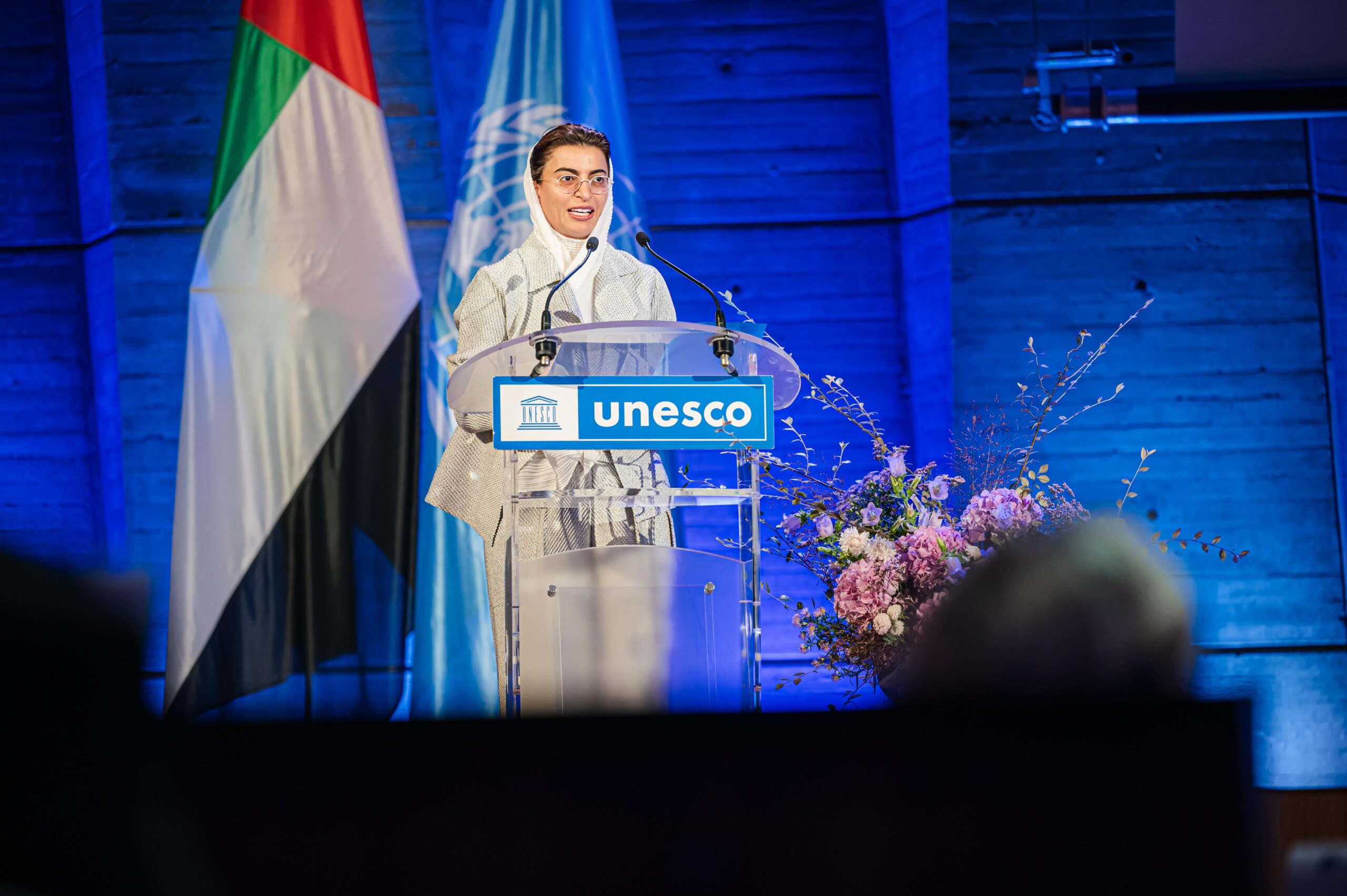
In her opening remarks, Her Excellency Noura Al Kaabi said: “It gives me great pleasure at the beginning to express my deepest gratitude for standing before you today, at this global institution—UNESCO—to celebrate the life and legacy of the late Sultan Bin Ali Al Owais, the poet, the philanthropist, and the cultural icon whose poetic and humanitarian voice continues to resonate across the Arab world and beyond.
This extraordinary man was born in 1925 in Al Heera in the Emirate of Sharjah, where he grew up in an environment rich in the traditions of pearl diving and trade. From this upbringing, he absorbed the values of patience, courage, and mastery. These very values shaped his path in life, as he came to treat words the way one treats pearls, selecting them with precision, polishing them with devotion, and offering them to the world with generosity and grace. His journey was truly a journey of giving, loyalty, and belonging.
Our late poet Al Owais did not confine his creativity to the crafting of verses. Rather, he went beyond poetry to authentically and sincerely express the aspirations and hopes of his fellow citizens, blending in his work the genius of heritage with the spirit of modernity. His giving did not stop at literary creativity; it extended into philanthropy, where he invested in the foundations of the future: education, cultural institutions, and incentive awards. In doing so, he ensured recognition and support for future generations of Arab creators across diverse fields.
Perhaps the most enduring manifestation of this immortal legacy is the Sultan Bin Ali Al Owais Cultural Award, launched in 1987 to serve as an annual beacon honouring pioneers of thought, literature, and science in the Arab world—across poetry, narrative, theatre, criticism, and humanistic and future studies. This award embodied his profound vision that culture is not a luxury, but rather the essence of progress and the safeguard of our identity. Through this, the legacy of our great poet contributes to strengthening the United Arab Emirates’ position as a beacon of culture, a meeting point for civilizational dialogue, and a bridge linking East and West.”
In her remarks, Noura Al Kaabi added: “This symposium, held under the patronage of Sheikh Abdullah bin Zayed Al Nahyan, Deputy Prime Minister and Minister of Foreign Affairs, and in partnership with UNESCO, reminds us of our shared responsibility: to nurture and honour the silenced voices that rise from local roots to reach global horizons. Sultan Al Owais was among the finest embodiments of this noble mission.
Al Owais’s poetry transcends narrow classifications; with its deep roots in heritage and his creative spirit aspiring towards the future, it continues to speak to successive generations. This is precisely the secret behind his enduring legacy, which we celebrate today, and his universal and humanistic message will remain a beacon lighting the way forward.
We hope that his poetic journey continues to be a source of inspiration, and may his generosity remain as a model that inspires and guides us in our pursuit of building a world that is more inclusive and just, and one that flourishes culturally, intellectually, and in its humanity.”
In his welcoming remarks, His Excellency Ernesto Ottone Ramirez, UNESCO Assistant Director-General for Culture, said: It is often said that words can outlive the moment in which they are spoken, resonating across cultures and centuries. Poetry, in particular, carries this timeless power to move hearts, to preserve memory, and to connect people across borders. Today, we gather to celebrate the centenary of the birth of Sultan Bin Ali Al Owais, whose words remain alive, offering wisdom and beauty to the world.
Sultan Al Owais was not only a poet of profound sensitivity, but also a writer, philanthropist, and cultural ambassador. For UNESCO, his life and work resonate deeply: they embody values of creativity, humanism, and solidarity that are central to our mission. This centenary is thus not only a tribute to a remarkable individual, but also a reminder of the universal role of literature and the arts in shaping societies.”
He added: “At UNESCO, we believe that culture is more than heritage and creativity: it is a force that nurtures dialogue, strengthens social cohesion, and inspires resilience in the face of global challenges. This conviction lies at the heart of our action, from safeguarding living heritage to fostering the diversity of cultural expressions; from supporting artists to enabling intercultural dialogue. It also guides the preparation of MONDIACULT 2025, where Member States will work together to advocate for culture as an independent goal in the future international agenda. In this light, the poetry of Sultan Al Owais is not only a national treasure, but a contribution to the shared narrative of humanity. As we celebrate his centenary, let us honour his legacy by renewing our collective commitment to place culture at the heart of humanity’s future.”
Also speaking at the event, His Excellency Dr. Sulaiman Mousa Al Jassim, Vice Chairman of the Board of Trustees of the Sultan Bin Ali Al Owais Cultural Foundation, said: “It is an honour for me to stand before you today in this international institution, which has made culture and beauty a universal language, as we mark one hundred years since the birth of a poet who transformed words into living action and generosity into a human mission — Sultan Bin Ali Al Owais.
We are especially proud that Sheikh Abdullah bin Zayed Al Nahyan, Deputy Prime Minister and Minister of Foreign Affairs, is the patron of this international cultural event. This gathering presents yet another shining cultural image of the UAE, represented by its late poet Sultan Bin Ali Al Owais, whose centenary we celebrate this year.
UNESCO has long believed that culture is the shortest path to peace, and that human identity is incomplete unless the creative memory of nations is preserved. From this belief comes the significance of designating 2025 as a year to honour Sultan Bin Ali Al Owais — not only as a tribute to his legacy, but as an acknowledgment of culture’s role in shaping humanity’s collective conscience. He believed that culture is a human responsibility, that poetry is the mirror of the soul, and that generosity is the highest form of dignity. From this deep awareness, his giving was transformed into an institution and a prize bearing his name — a platform for creativity and a forum for cultural dialogue.”
Al Jassim added: “Al Owais understood very early that the strength of nations is not measured by their wealth or towering buildings, but by the intellectual heritage they preserve and the questions and dreams they contribute to the human journey. As we open this event under the theme “Sultan Al Owais: A Journey of Poetry, A Journey of Giving”, we are in fact opening chapters of a life that gave poetry the meaning of life itself, and generosity the meaning of responsibility.
The Al Owais Cultural Foundation extends its deepest gratitude to UNESCO for its continued role in safeguarding cultural heritage and fostering human dialogue, and to all the participants in this symposium, whose research and writings have added such valuable contributions to this international celebration.”
This was followed by a speech by His Excellency Ali Al Haj Al Ali, UAE Permanent Delegate to UNESCO and Chair of the Arab Group, in which he said: “It gives me great pleasure to welcome you today to this distinguished cultural gathering, in my capacity as Chair of the Arab Group, as we come together to celebrate the legacy of the great poet Sultan Bin Ali Al Owais. His life reminds us that poetry and generosity are not separate attributes, but rather two radiant facets of a higher human value — two inseparable dimensions of the spirit: one that creates, and one that gives.
This commemoration is not merely a recollection of the past, but also a moment of reflection on the role of creators today. In an age of digital transformation and accelerated global communication, poetry remains a window onto what speed can cause us to lose: the rhythm of emotions, the depth of words, and the impact of images and symbols on the human soul. With just a short poem, we can express the inexpressible, break intellectual routine, and renew our sense of humanity in an age of algorithms.
Culture remains a cornerstone for creating and enriching meaning. This is where the essential role of creators lies: they remind us that cultural diversity is not a challenge to be overcome, but a treasure to be safeguarded and cherished. Their voices awaken our humanity and our shared values.”
Concluding, the UAE Permanent Delegate said: “UNESCO recognised this vision early on. Through the 2005 Convention on the Protection and Promotion of the Diversity of Cultural Expressions, the Organisation affirmed that every culture has the right to its rightful place on the world’s cultural map. Yet some voices — including those from several Arab countries — remain marginalised or limited in the international cultural arena. Such absence does not only deprive these cultures of their rightful recognition; it also deprives the entire world of intellectual richness and creative perspectives it needs now more than ever.
In this context, the UAE is proud of its active contribution to bridging this gap — supporting UNESCO programmes that protect heritage, promote cultural diversity, and foster creative industries as drivers of prosperity. The UAE also backs pioneering initiatives such as the UNESCO–Sharjah Prize for Arab Culture, which is awarded annually to individuals or institutions that have made exceptional contributions to the dissemination and promotion of Arab culture worldwide. The prize helps introduce Arab culture to broader audiences, builds bridges of dialogue between civilisations, and promotes intercultural dialogue and mutual understanding between cultures.
These efforts reflect our deep conviction that cultural dialogue is an integral part of building peace and achieving sustainable development. The late poet Sultan Al Owais embodied this conviction: through his poetry, he gave voice to the hopes and aspirations of Arabs, and his words transcended borders to join the chorus of humanity at large.
He concluded his remarks by saying: Let us continue — hand in hand — to work for a UNESCO that empowers every poet, every artist, and every culture to receive the recognition, respect, and dialogue it deserves. This is the best tribute we can offer to the memory of Sultan Al Owais: to make his poetic and human journey a source of inspiration for us all, from which we draw generosity, creativity, and beauty.”
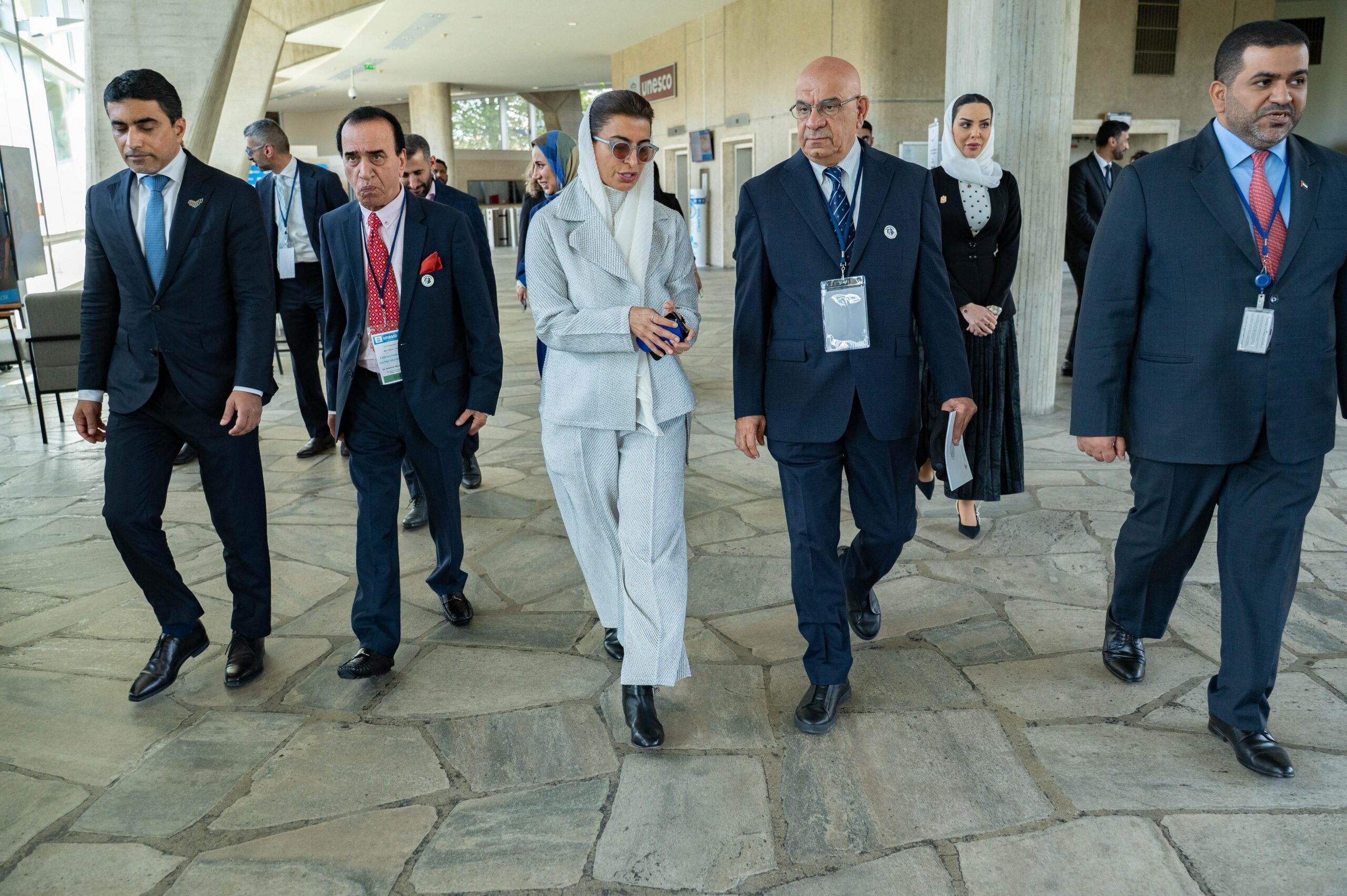
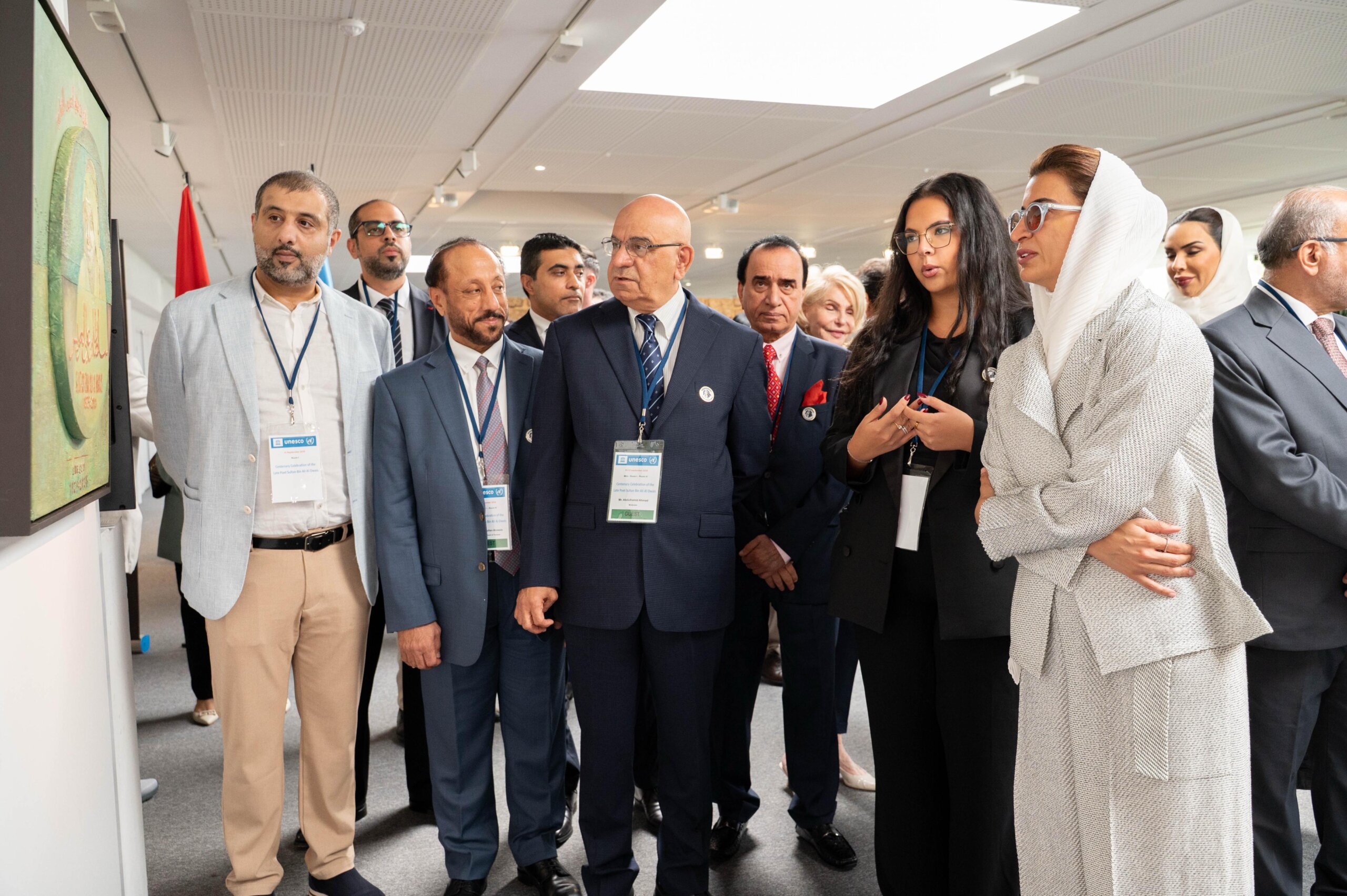
Prior to the opening of the symposium, Her Excellency Noura Al Kaabi, accompanied by His Excellency Fahad Saeed Al Raqbani, UAE Ambassador to France, along with delegations from various countries, writers, and public figures, toured the exhibition “Words Breathe Beauty”.
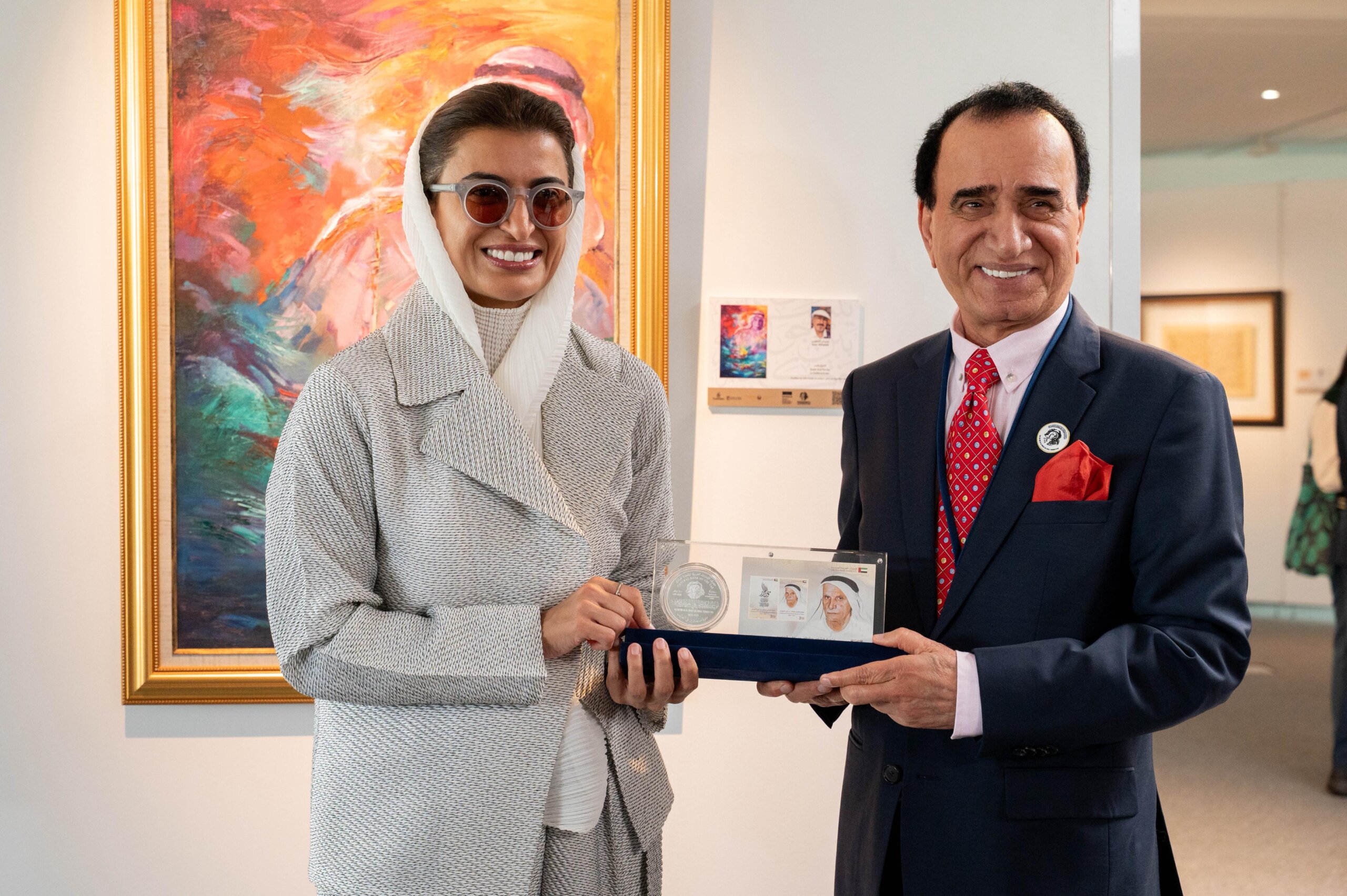
She expressed her admiration for the paintings and photographs on display at the Miro Hall at UNESCO, held on the sidelines of the symposium. She also received a commemorative coin issued by the Central Bank of the UAE from His Excellency Dr. Sulaiman Mousa Al Jassim. Noura Al Kaabi extended her thanks to the Al Owais Cultural Foundation for the successful organisation of this international celebration, which further strengthened the UAE’s presence on the global cultural scene.
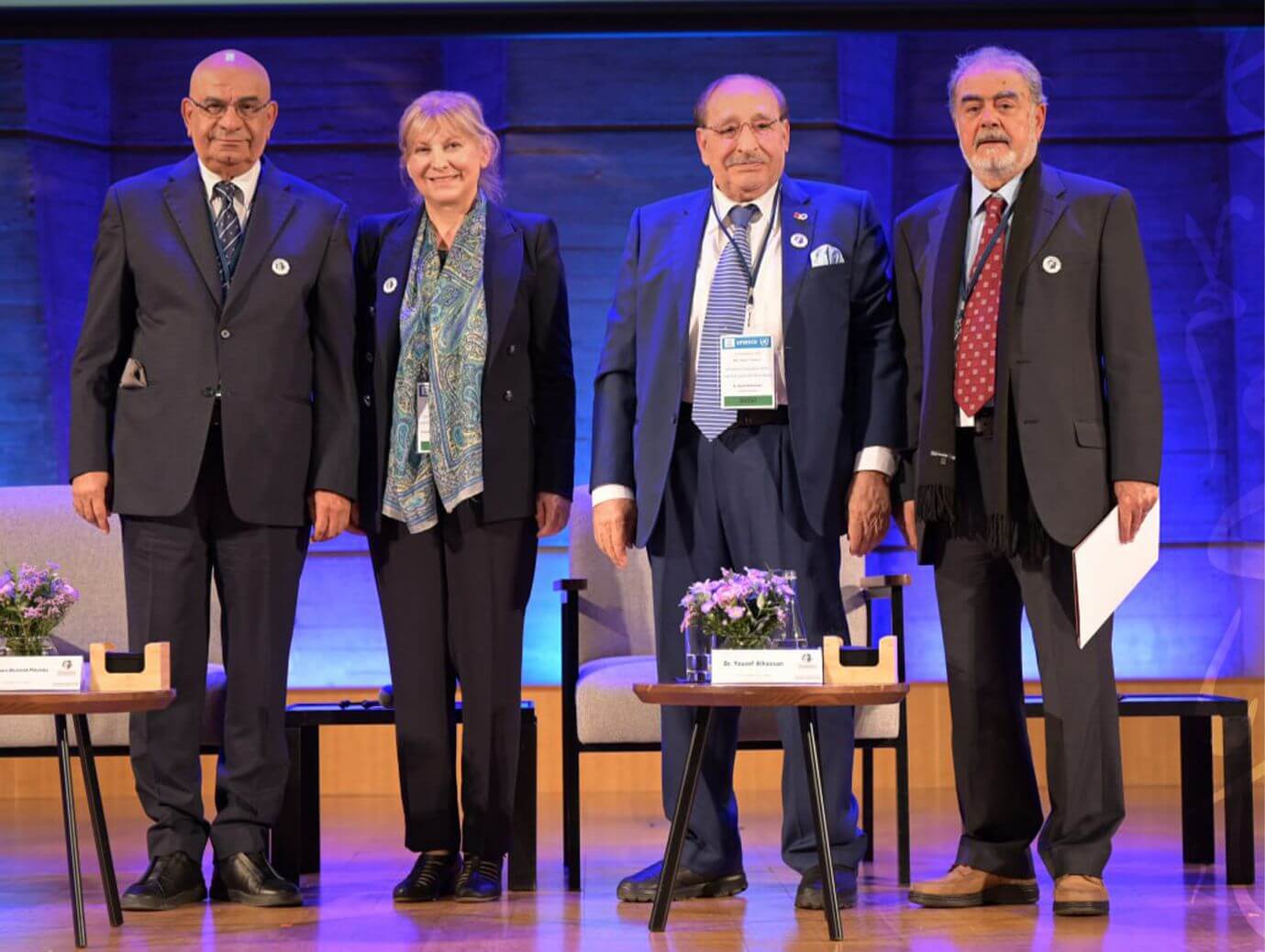
The symposium began with a short documentary film on the life of Sultan Al Owais, followed by dialogue sessions engaging an esteemed group of researchers, writers, poets, and orientalists from across the world. On the first day, speakers included Dr. Barbara Michalak (Poland), Dr. Alawi Al Hashimi (Bahrain), Dr. Isabella Camera (Italy), Dr. Stefan Weidner (Germany), and Dr. Boutros Al Hallaq (France), along with Abdul Ghaffar Hussain, Dr. Fatima Al Sayegh, Dr. Youssef Al Hasan, and Abdul Hamid Ahmad from the UAE.
The second day saw valuable contributions from Dr. Shawqi Abdul Amir, Dr. Benedict Lautier (France), Dr. Sulaiman Mousa Al Jassim, Dr. Abdulkhaliq Abdullah, and Professor Ibrahim Al Hashmi from the UAE, poet Sawsan Dahneem (Bahrain), poet Shawqi Bazei (Lebanon), poet Karim Matouq (UAE), and poet Hussein Darwich (Syria).
Artists participating in the “Words Breathe Beauty” exhibition included Ihsan Al Khatib, Amir Falsafi, Taj Al-Sir Hassan, Hakim Ghannam, Hossam Ahmed, Khulood Al Jabri, Mohammed Farouq Al Hadad, Zaid Al Azami, Sami Makarem, Salma Al Marri, SawaJ Goik, Salah Sherzad, Abbas Akhavein, Abdul Jabbar Weiss, Abdul Qader Al Mubarak, Osman Özçay, Ali Sherazi, and Omran Ali Al Balooshi. They were joined by Gholam Amirkhan, Mohsen Abbadi, Mehmet Özçay, Mohammed Fehmi, Mahmoud Al Abbadi, Musab Al Douri, Najat Makki, Narjes Noureddine, Huda Saeed Al Dhahouri, Yaser Dweik, and Yousef Dweik.
On the sidelines of the symposium, a mini book fair was held, showcasing publications from the Foundation, in addition to translations of Sultan Al Owais’s poetry into French by Antoine Jouki and into English by Dr. Omnia Amin, both published under the title “Ashes of Love”. The exhibition also saw the release of two books: “Sultan bin Ali Al Owais: A Life of Service and Giving” by Ibrahim Al Hashimi, and “The Poetic Radiance in the Poetry of Sultan Al Owais” by Dr. Samar Rouhi Al Faisal.
UNESCO has officially designated 2025 as the year to commemorate the centenary of Emirati poet Sultan Bin Ali Al Owais, following a detailed submission by the UAE National Commission for Education, Culture and Science during the 42nd session of UNESCO’s General Conference.
The centennial programme features a rich array of cultural events, including art exhibitions, documentary screenings, musical performances, reprints of poetry collections, the publication of illustrated books and stamps, commemorative coins, and other initiatives honouring a poet whose legacy continues to shape Emirati and Arab cultural life.
Among Al Owais’s most enduring contributions is the establishment, in 1987, of the Sultan Bin Ali Al Owais Cultural Award, one of the Arab world’s most prestigious literary prizes. Presented biennially, the award recognises Arab writers and intellectuals across disciplines — short story, novel, drama, poetry, literary studies and criticism, humanitarian studies, and future studies — on the condition that the nominated works reflect both the authenticity of Arab thought and the aspirations of the Arab nation.
Born in 1925 in the town of Al Hira, Sharjah, Al Owais belonged to a family of pearl merchants with extensive trade links. He gained early commercial experience working alongside his father in the pearl trade, frequently travelling between India and the UAE.
Al Owais began writing poetry in 1947, with his first published piece appearing in Beirut’s Al Woroud magazine in 1970. Known for the emotional depth and humanism of his verse, he earned a distinguished place among Emirati poets, serving as a bridge between literary generations. His debut collection was issued in 1978 by Al Ittihad Press, followed by “Mirrors of the Gulf” (Beirut, 1985), and later “Diwan Sultan Al Owais: The Complete Collection” in 1993.
Recognised as a towering figure in Gulf poetry, Al Owais is regarded by literary scholars as part of the second generation of Al Hira poets, alongside Sheikh Saqr Qasimi (1924–1994) and Khalfan bin Musbah (1923–1946). His works continue to resonate across cultures and generations, underscoring his lasting impact on Arab literature.