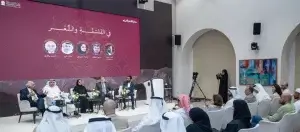
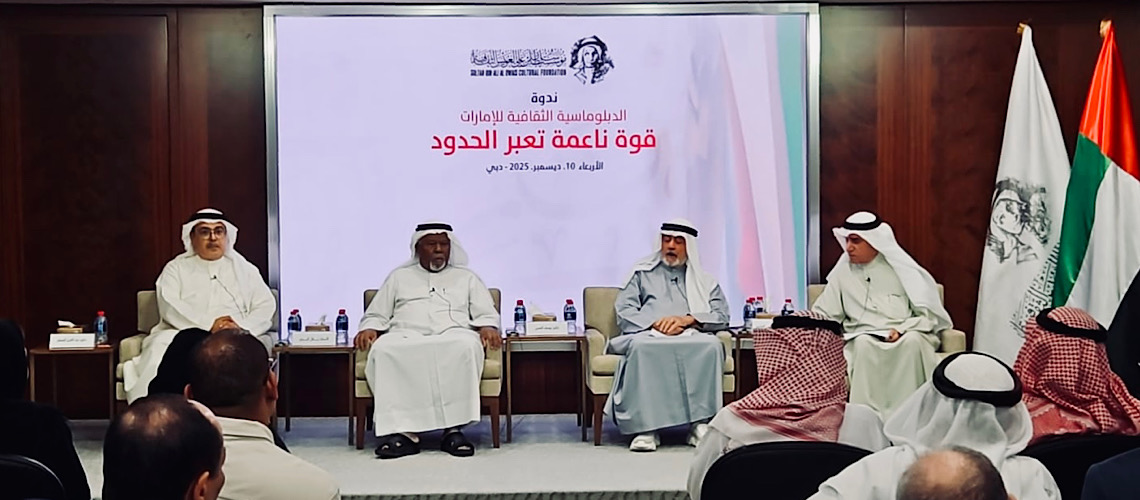
The Sultan Bin Ali Al Owais Cultural Foundation has concluded its cultural activities for 2025 with a symposium titled “The UAE’s Cultural Diplomacy: Soft Power Beyond Borders”. Moderated by Dr Sulaiman Al Jassim, Vice Chairman of the Foundation’s Board of Trustees, the event featured Dr Yousef Al Hassan, Bilal Al Badour, and Dr Abdulaziz Al Musallam. The symposium was attended by a distinguished gathering of intellectuals and figures interested in cultural and diplomatic affairs.
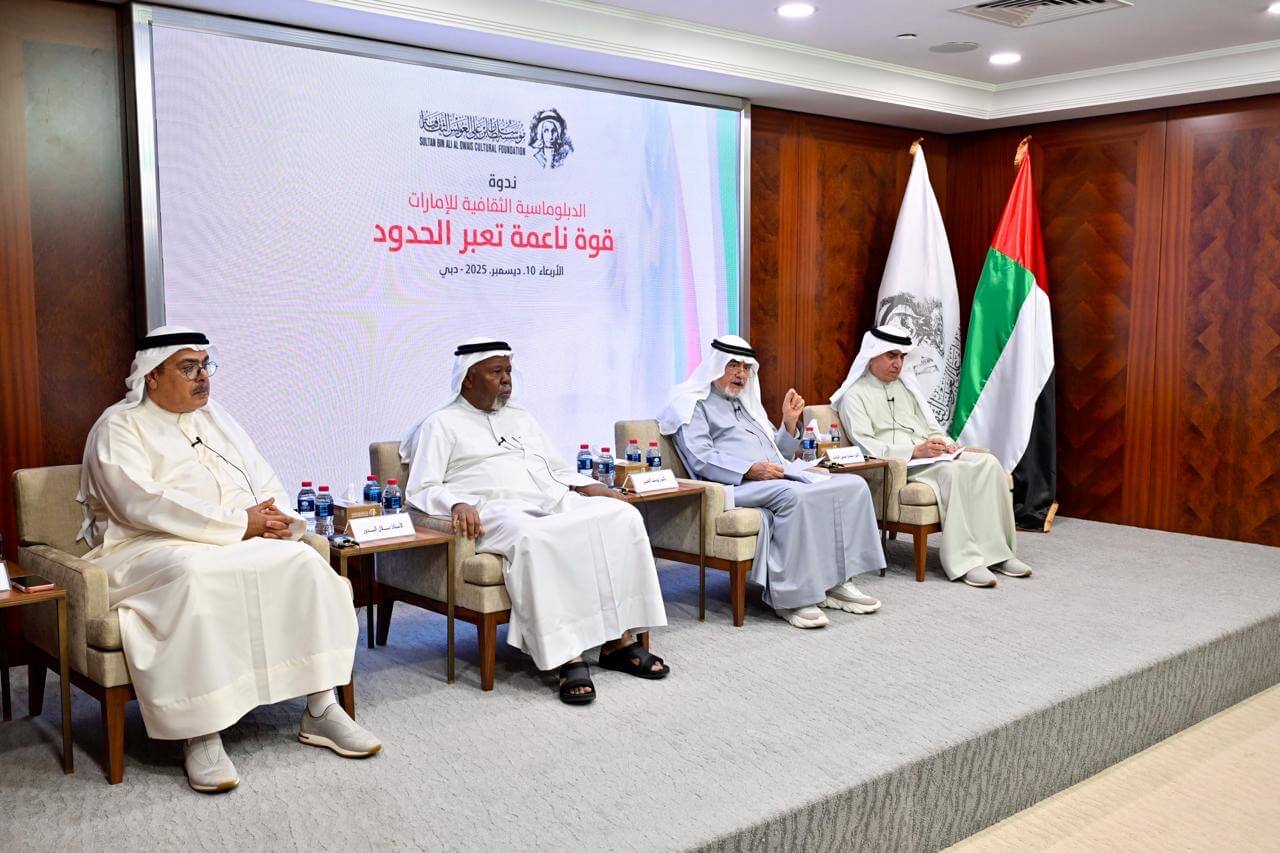
At the opening of the symposium, Dr Sulaiman Al Jassim underlined the importance of culture as a strategic tool in building international relations and enhancing the global standing of nations. He highlighted the UAE’s success in deploying culture intelligently as part of its vision for civilisational dialogue and openness to the world.
Dr Yousef Al Hassan offered an overview of the concept of soft power and the evolution of cultural diplomacy, noting that the idea of soft power emerged in the late 20th century alongside the development of international relations and the need for new, more influential tools to engage with peoples. He added that soft power is based on persuasion and attraction, which require time and sustained effort to build and entrench.
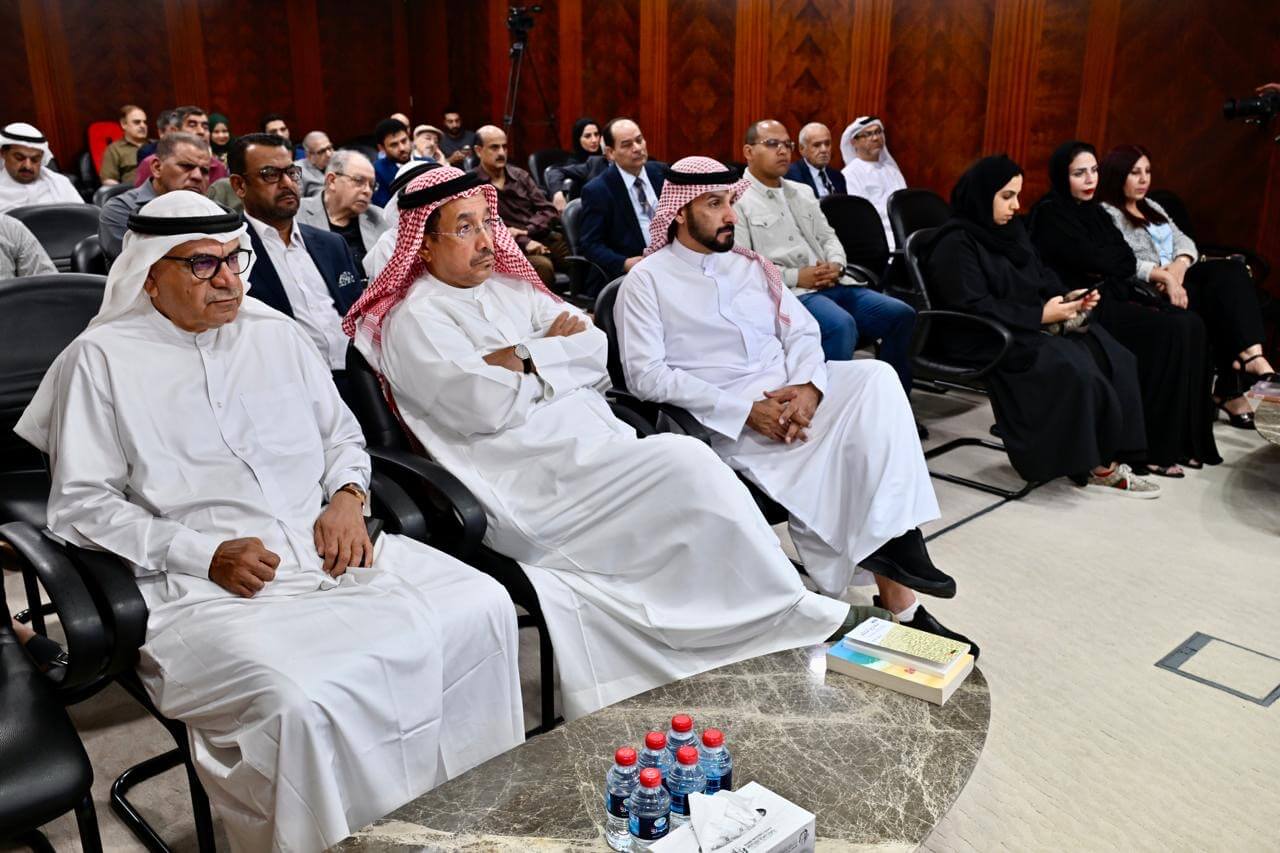
A distinguished gathering at the Cultural Diplomacy symposium
Dr Youssef Al Hassan also presented examples from several countries that have harnessed the arts, media, and universities to shape their soft power, explaining that these sectors have become influential tools in shaping how nations are perceived around the world. He added that universities and research centres have emerged as platforms to produce ideas and the dissemination of knowledge, making them an integral component of modern cultural diplomacy. He further stressed that the media today represents a key tool in shaping public opinion and building bridges between societies.
Dr Al Hassan added that the UAE recognised the importance of this approach at an early stage, adopting cultural diplomacy as a means of strengthening its relations with countries across the world based on understanding and mutual respect. This, he said, has been guided by a balanced and pragmatic vision that positions culture as a space for dialogue and cooperation. Dr. Al Hassan continued by outlining that the pillars of the UAE’s cultural diplomacy include civil society, media, universities, arts, theatre, and cultural institutions, all of which contribute to shaping a positive image of the nation.
H.E Bilal Al Badour enriched the discussions by reviewing several practical examples that embody the UAE’s soft power, drawing on his experience in diplomatic work. He explained that the UAE has supported cultural institutions in various parts of the world and launched leading initiatives to support artists and creative minds within their own countries, strengthening its cultural presence abroad.
He noted that since the establishment of the Union, the UAE has been committed to cultural openness and to presenting Emirati intellectuals and writers to the world through local magazines and cultural pages, which played a prominent role in introducing Emirati creativity. He added that these cumulative efforts laid the foundations of a global cultural bridge, positioning the UAE as a platform for cultural and civilisational exchange. Drawing on his diplomatic experience, he also cited examples of how diplomatic practice can be directed towards developing soft power whose impact endures within society.
Dr Abdulaziz Al Musallam reviewed the experience of the Emirate of Sharjah in consolidating the UAE’s cultural diplomacy, praising the pioneering role of His Highness Dr. Sheikh Sultan bin Mohammed Al Qasimi, Supreme Council Member and Ruler of Sharjah, in establishing a comprehensive cultural approach that has made culture a fundamental pillar in building the nation’s soft power.
Al Musallam outlined that His Highness Dr. Sheikh Sultan recognised at an early stage the importance of culture in building bridges of communication with the world. He noted that his vision led to the establishment of institutions dedicated to theatre, poetry, and arts, as well as the founding of the Arab Cultural Institute in Milan and the Centre for Arab Studies in Portugal. These initiatives, Al Musallam said, have strengthened the UAE’s cultural presence internationally and opened new horizons for cultural dialogue between East and West.
Al Musallam referred to the cultural project launched by the Ruler of Sharjah has represented one of the most prominent pathways supporting the advancement of the UAE’s cultural diplomacy, through pioneering initiatives and cultural institutions that have extended across multiple continents. He explained that the emirate has leveraged its standing and prestigious international titles, including the Cultural Capital of the Arab World, the Capital of Islamic Culture, and World Book Capital, to introduce the world to Emirati heritage and present a vivid image of its authenticity and openness.
In conclusion, Al Musallam noted that the cultural weeks organised by Sharjah in several global cities serve as a practical model of cultural diplomacy, creating a space for dialogue and human connection, and establishing a balanced Emirati presence that brings together authenticity and modernity.
The session also featured discussions and contributions from attendants which enriched the symposium. The event concluded with commemorative photographs taken by the participants with attendees.