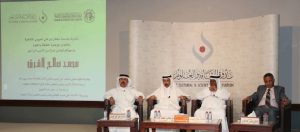
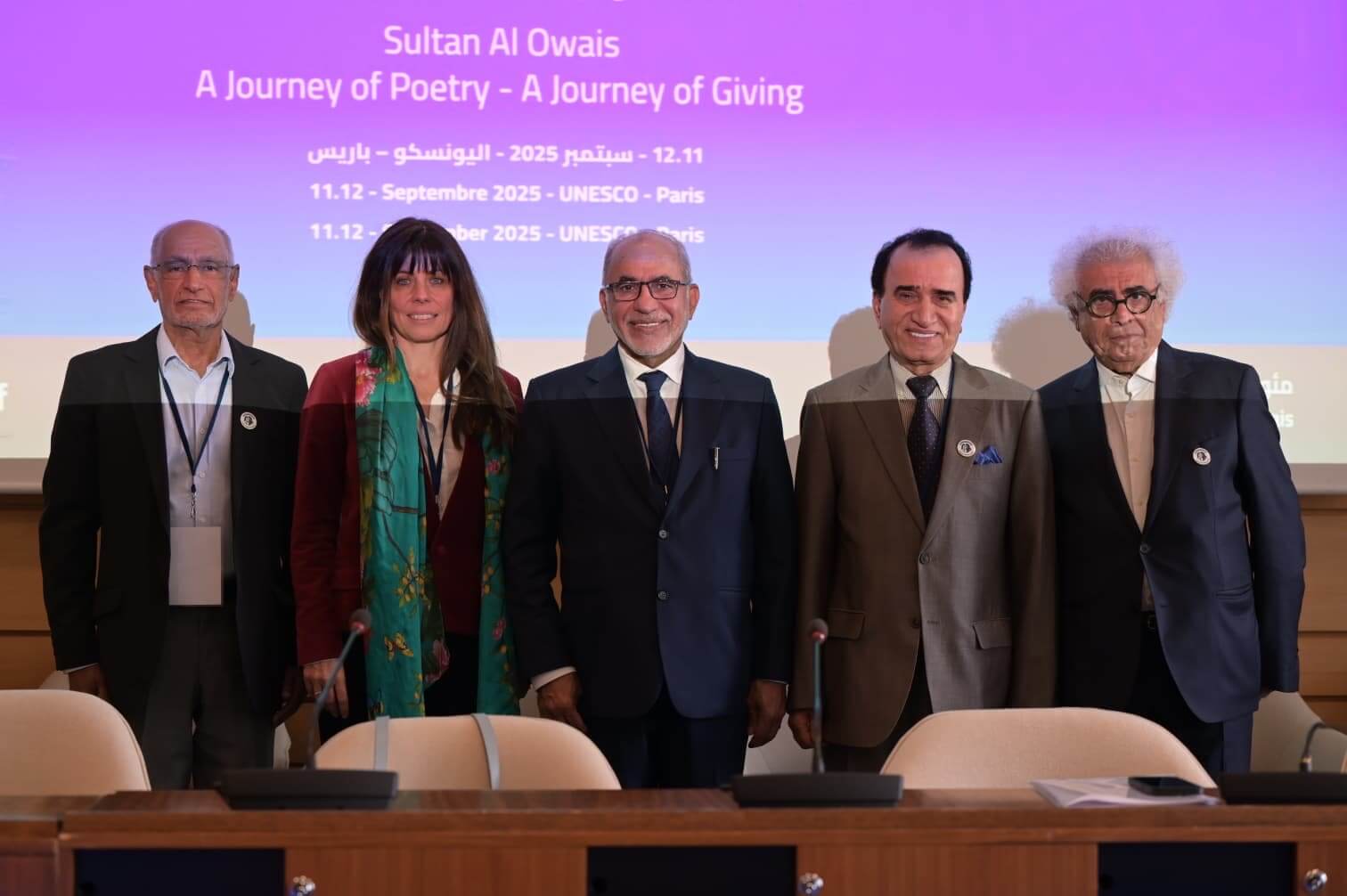
The groundbreaking international symposium “Sultan Al Owais… A Journey of Poetry… A Journey of Giving”, organised by the Sultan Bin Ali Al Owais Cultural Foundation in collaboration with UNESCO, to mark the centenary of the late poet Sultan Bin Ali Al Owais (1925–2025), concluded on Friday, 12 September 2025.
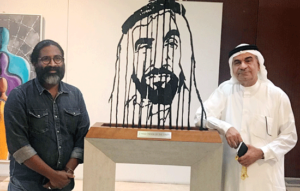
Under the patronage of Sheikh Abdullah bin Zayed Al Nahyan, Deputy Prime Minister and Minister of Foreign Affairs, the symposium featured an art and photo exhibition titled “Words Breathe Beauty”, and a mini book fair showcasing publications from the Foundation, in addition to translations of Sultan Al Owais’s poetry into French and English. It also included a short documentary on his life, alongside intellectual and critical sessions and a poetry evening, offered in-depth reflections on the poetry and personality of Sultan Al Owais.
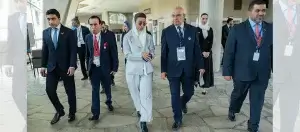
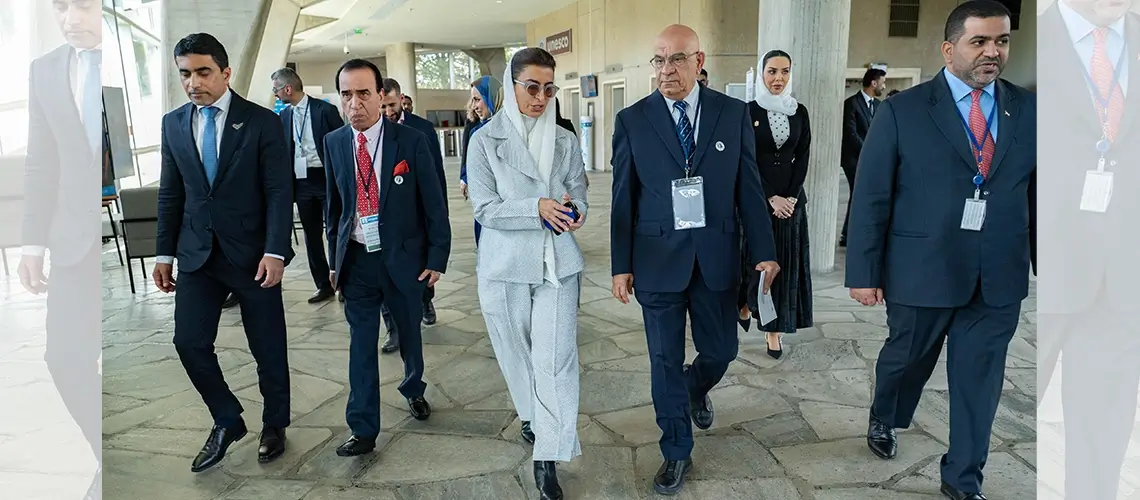
The symposium was attended by Her Excellency Noura bint Mohammed Al Kaabi, Minister of State at the Ministry of Foreign Affairs; H.E. Fahad Saeed Al Raqbani, UAE Ambassador to France; H.E. Ernesto Ottone Ramirez, UNESCO Assistant Director-General for Culture; H.E. Dr. Sulaiman Mousa Al Jassim, Vice Chairman of the Board of Trustees of the Sultan Bin Ali Al Owais Cultural Foundation; and H.E. Ali Al Haj Al Ali, UAE Permanent Delegate to UNESCO and Chair of the Arab Group. H.E. Abdul Hamid Ahmad, Secretary General of the Al Owais Foundation, several heads of permanent international delegations to UNESCO, distinguished intellectuals, writers, public figures, and media professionals were also present.
The two-day sessions, which brought together a distinguished group of researchers, writers, poets and orientalists from around the world, featured a wide range of critical perspectives on Al Owais’s poetry, his life, and his rich human legacy.
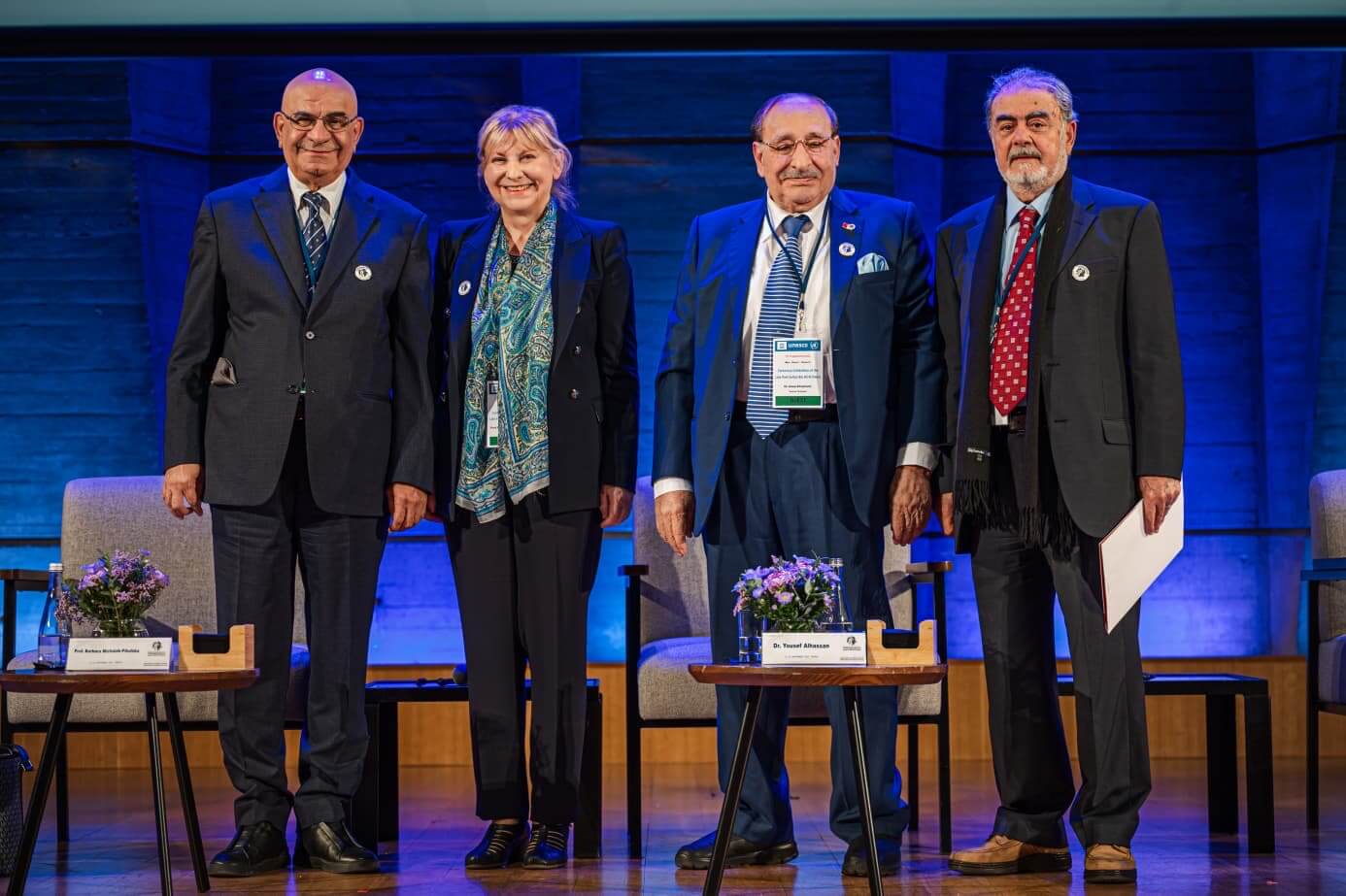
On the first day, participants included Dr. Barbara Michalak from Poland, who presented a study titled “Sultan Al Owais: Poet of Love and a Builder of Human-to-Human Bridges,” Dr. Youssef Al Hasan with a paper entitled “Arab Enlightenment in the Gulf — Sultan Al Owais as a Model” and Dr. Alawi Al Hashimi from Bahrain, whose paper was titled “The Poet Sultan Al Owais: A Reading in His Critical Thought.” The session was moderated by H.E. Abdul Hamid Ahmad.
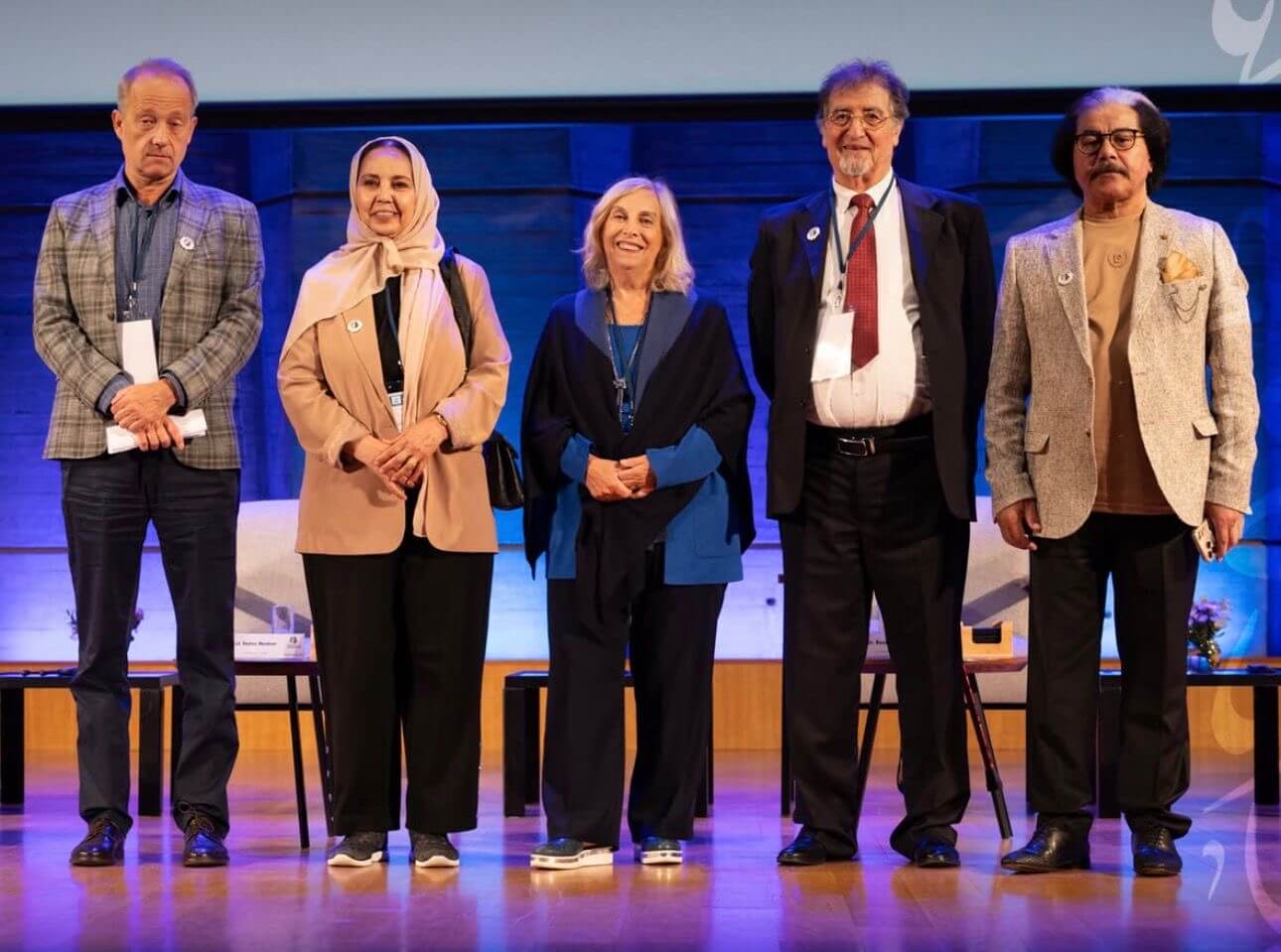
The second session featured Dr. Isabella Camera from Italy, who presented a paper titled “Authenticity and Modernity in the Love Poetry of Sultan Al Owais,” Dr. Stefan Weidner from Germany, whose paper titled “Sultan Al Owais and the Reception of Arabic Poetry in Germany,” and Dr. Boutros Hallaq from France, who delivered a paper entitled “And Life May Be Shaped Into a Poem.” Writer Abdul Ghaffar Hussain contributed a testimony titled “The Establishment of the Sultan Bin Ali Al Owais Cultural Foundation Award,” which was read on his behalf by Nasser Al Dhaheri. The session was moderated by Dr. Fatima Al Sayegh.
On the second day, participants included Dr. Shawqi Abdul Amir, who presented a study titled “The Role of the Al Owais Ward in Enriching Arab Cultural Life”, Dr. Abdulkhaleq Abdullah with a paper entitled “The Image of the Intellectual in the Eyes of Sultan Al Owais,” and Dr. Bénédicte Letellier from France, who read a paper titled “The Poetic Legacy of Sultan Al Owais: The Values of Poetry in the Age of Globalization.” Dr. Sulaiman Mousa Al Jasem contributed a testimony titled “Sultan Al Owais as He Should Be Told: Economics Through Human Eyes”. The session was moderated by Ibrahim Al Hashimi.
The closing session, dedicated to poetry, shined with diverse readings from Sultan Al Owais’ legacy, with Emirati poet Karim Matouq presenting selected readings from the works of Sultan Al Owais. Lebanese poet Shawqi Bazei also recited a number of his pieces, while Bahraini poetess Sawsan Danheem offered her own poetic selections. The evening, moderated by Syrian poet Hussein Darwich, was warmly received by the audience, who praised its richness and diversity across schools of poetry and influential artistic movements.
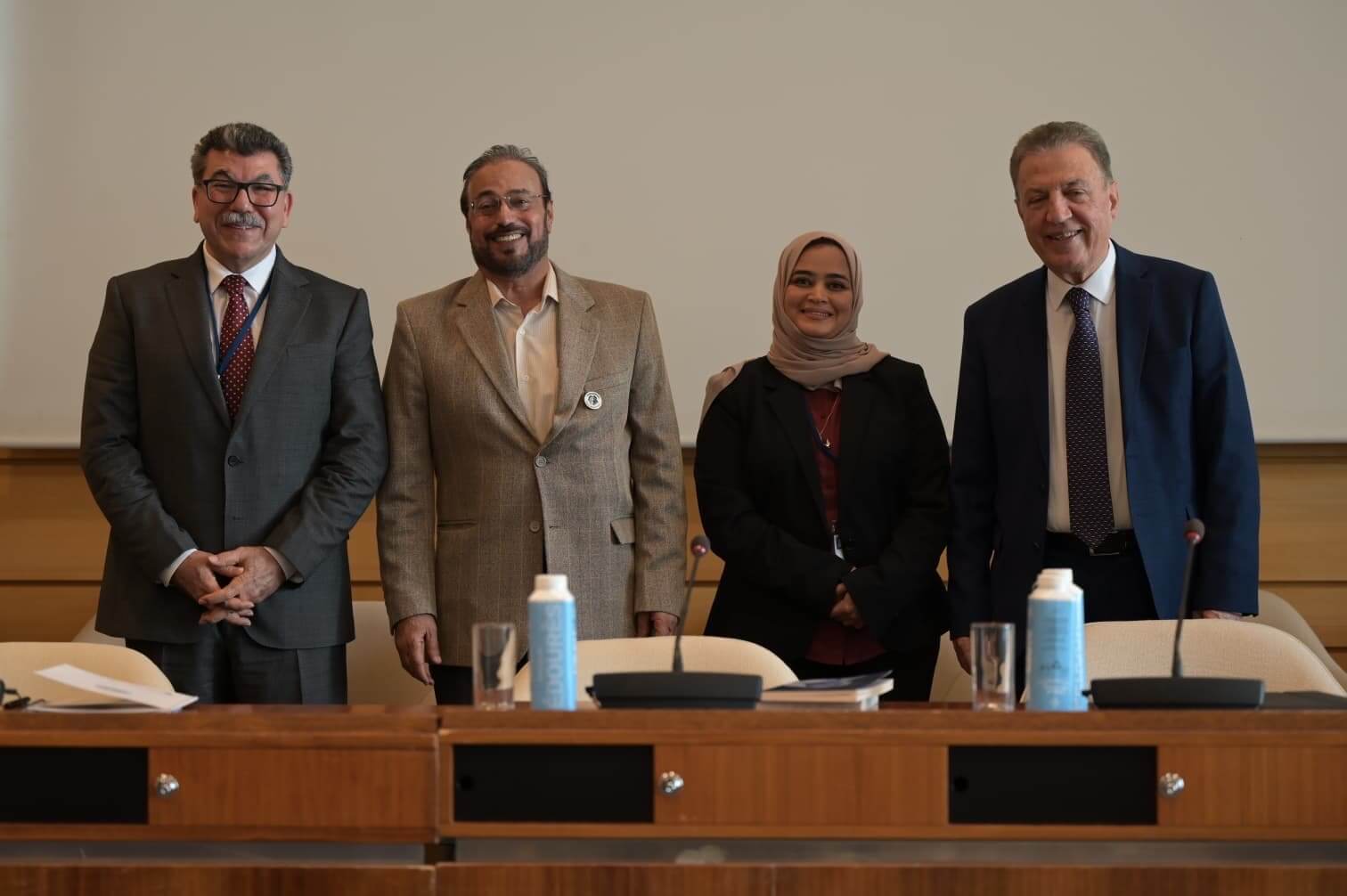
The evening was accompanied by live translations of the sessions, attended by a diverse audience representing various cultures — a reflection of UNESCO’s very nature, which brings together dozens of nations under one roof, with each country or culture imprinting its own distinctive character on the activities.
UNESCO officially designated 2025 as the centenary year of Sultan Bin Ali Al Owais, following a comprehensive review of his accomplishments submitted by the UAE National Commission for Education, Culture and Science during the 42nd session of UNESCO’s General Conference.
The centennial celebrations feature a broad spectrum of cultural events, ranging from art exhibitions, documentary screenings, and musical performances to the reprinting of poetry collections, the publication of illustrated books and stamps, the minting of commemorative coins, and other initiatives honouring an influential Emirati poet whose legacy continues to enrich both local and Arab culture.
He was meticulous in his poetry, despite beginning to compose at an early age, and is regarded as one of the leading poets of the United Arab Emirates, serving as a bridge between two generations of writers and poets, and as a pioneering voice of love poetry in the Arabian Gulf.
Sultan Al Owais’s poetry resonates with people from diverse backgrounds, for he was sincere in expressing the depth of the self without artifice. His first poetry collection was published in 1978 by Al Ittihad Press, Publishing and Distribution Corporation, followed by poetry diwan “Mirrors of the Gulf (Beirut, 1985) and “Diwan Sultan Al Owais: The Complete Collection” in 1993. According to academic studies, Sultan Al Owais is classified as part of the second generation of Al Hira poets, which included Sultan Al Owais (1925–2000), Poet Sheikh Saqr Qasimi (1924–1994), and Khalfan bin Musbah (1923–1946).