Under the patronage of His Highness Sheikh Dr Sultan bin Mohammed Al Qasimi, Supreme Council Member and Ruler of Sharjah, the Sharjah Calligraphy Biennial 2026, set to take place in October under the theme “Mizan” (Scale or Balance), will honour three distinguished artists in Arabic calligraphy. In its 12th edition, the Biennial will honour Emirati calligrapher Ali Al Hammadi, Belaid Hamidi from Morocco and Khalifa El Shimy from Egypt.
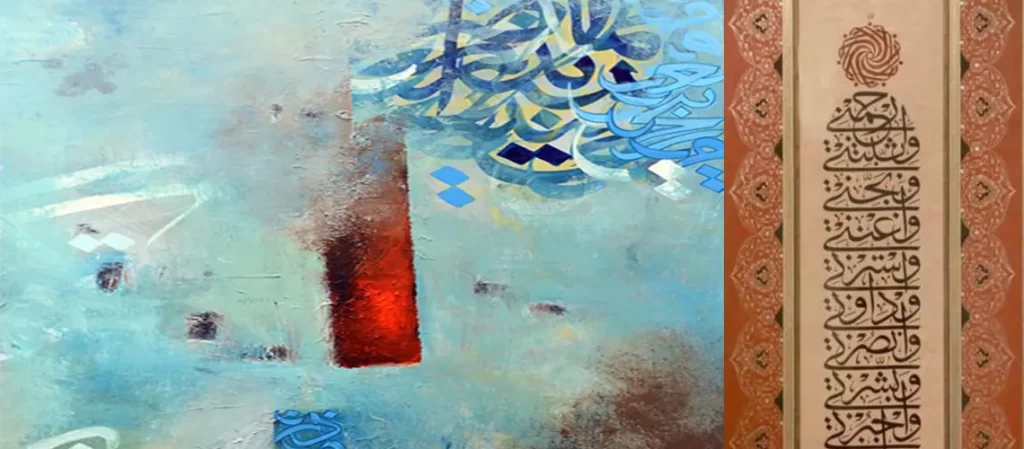
On the opening day of the biennial, three-day solo exhibitions dedicated to the honourees will open at “Calligraphy Square”, showcasing selections of their works and highlighting their artistic journeys and contributions to the evolution of Arabic calligraphy. This aims to enable visitors to gain a glimpse into their diverse creative experiences and aesthetic visions.
Mohammed Ibrahim Al Qasir, Director of Cultural Affairs at the Sharjah Department of Culture and Director of the Biennial, said: “We continue with the support of His Highness the Sharjah Ruler to strengthen the Biennial’s role as a global cultural and artistic platform celebrating Arabic calligraphy and fostering dialogue among diverse artistic experiences.”
He noted the recognition achieved by the Biennial over its past editions reflects its distinguished status on the Arabic calligraphy in the world. “Honouring the three creative artists comes in recognition of the artists’ creative and intellectual contributions, including their artistic practices as well as their research and documentation efforts,” Al Qasir emphasised.
He underscored that the Biennial is committed in each edition to recognise outstanding artists who contributed to develop Arabic calligraphy and strengthen its presence regionally and globally. Al Qasir added that the new edition will feature programmes and exhibitions exploring the evolving relationship between craftsmanship and visual arts, alongside solo exhibitions by the honourees, offering visitors insight into the richness and diversity of Arabic calligraphy.
Speaking about the Biennial’s theme, “Mizan”, Al Qasir said the title carries broad artistic connotations that offer calligraphers wide creative scope in producing calligraphic works. “The theme also evokes multiple meanings that enhance the aesthetic value of the work and reflect the creative energy of calligraphic art, elevating it to a distinguished artistic status through its unique creative identity,” he said.
Al Qasir noted that since its launch in 2004, the biennial has succeeded in creating an interactive platform bringing together calligraphers, artists and researchers from around the world. He added that the event continues to present new artistic visions inspired by the depth of Arab and Islamic heritage while keeping pace with modern aesthetic and artistic transformations.
Emirati calligrapher Ali Al Hammadi developed a passion for Arabic calligraphy from an early age, gradually refining his practice into a professional artistic journey marked by a blend of geometric precision and visual aesthetics. Through exhibitions and specialised workshops in the UAE and abroad, Al Hammadi built a body of work rooted in the authenticity of the Arabic script while embracing a contemporary spirit. He studied Arabic calligraphy and Islamic ornamentation at the Sharjah Centre for Arabic Calligraphy.
Moroccan calligrapher Belaid Hamidi’s artistic career has long been associated with Arabic calligraphy, particularly the Moroccan-Andalusian style, whose aesthetics he has dedicated much of his work to preserving and advancing. Since 1996, he has become known for producing the “Hilya Sharifa”, translated as “the Noble Description,” in this style. His contributions also extend to academia and judging, serving as a member of the International Jury Committee for Arabic Calligraphy in Istanbul since 2007, while teaching calligraphy and promoting its techniques in countries including Malaysia and Indonesia.
Egyptian artist Khalifa El Shimy is recognized for his mastery in blending traditional Arabic calligraphy with contemporary art forms, often associated with the modern Hurufiyya movement. He is regarded as one of the prominent figures in Arabic calligraphy and Hurufiyya art, with a practice that combines the authenticity of classical calligraphy with a contemporary visual approach. Based in the UAE since the 1970s, he has left a distinct mark through numerous calligraphic and decorative works.
Painting with his words, El Shimy has used the Arabic letter as both an aesthetic and expressive element that transcends traditional writing, presenting exhibitions exploring the spiritual and artistic dimensions of Arabic script, including his exhibition “Ibtihalat” (Supplications).