
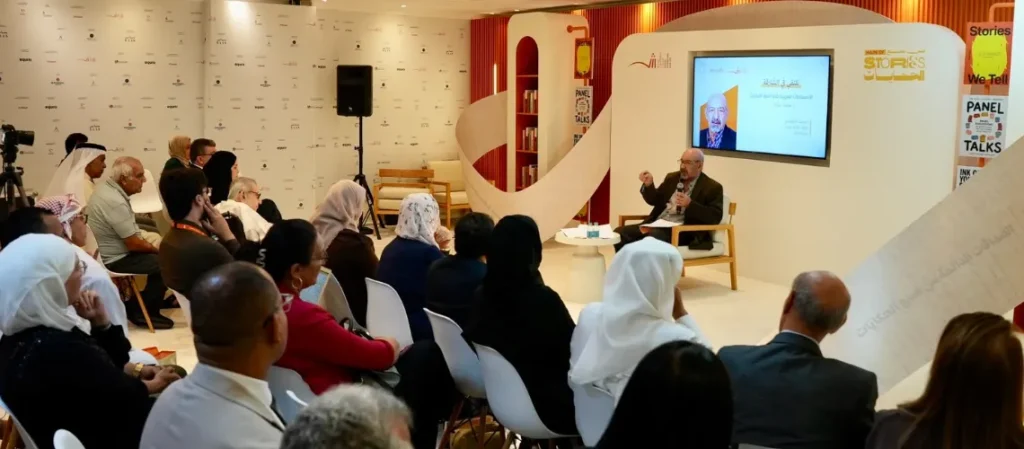
The Sultan bin Ali Al Owais Cultural Foundation organised a lecture titled “Arab Contributions to Modern Literary Criticism” by Professor Saeed Benkrad, a prominent Moroccan academic and thinker, on Friday evening, November 6, on the sidelines of the Sharjah International Book Fair (SIBF 2026).
The lecture was attended by Dr Fatima Al Sayegh and Nasser Al Dhaheri, members of the Foundation’s Board of Trustees, along with a distinguished gathering of writers, literary critics, researchers and visitors to the fair.
Widely recognised as a pioneer in semiotics and narrative analysis in the Arab world, Benkrad said the Arabic literary tradition had not developed an independent theory of literary criticism but nevertheless contained numerous ideas that some scholars have identified as corresponding to concepts found in modern semiotics.
He explained that these ideas were found in specialised dictionaries and works on grammar, rhetoric, philology and semantics. He noted that scholars working in these fields regarded the origins and nature of language, and its relationship with the external world, as the key to understanding and classifying meanings, often in accordance with specific intended purposes.
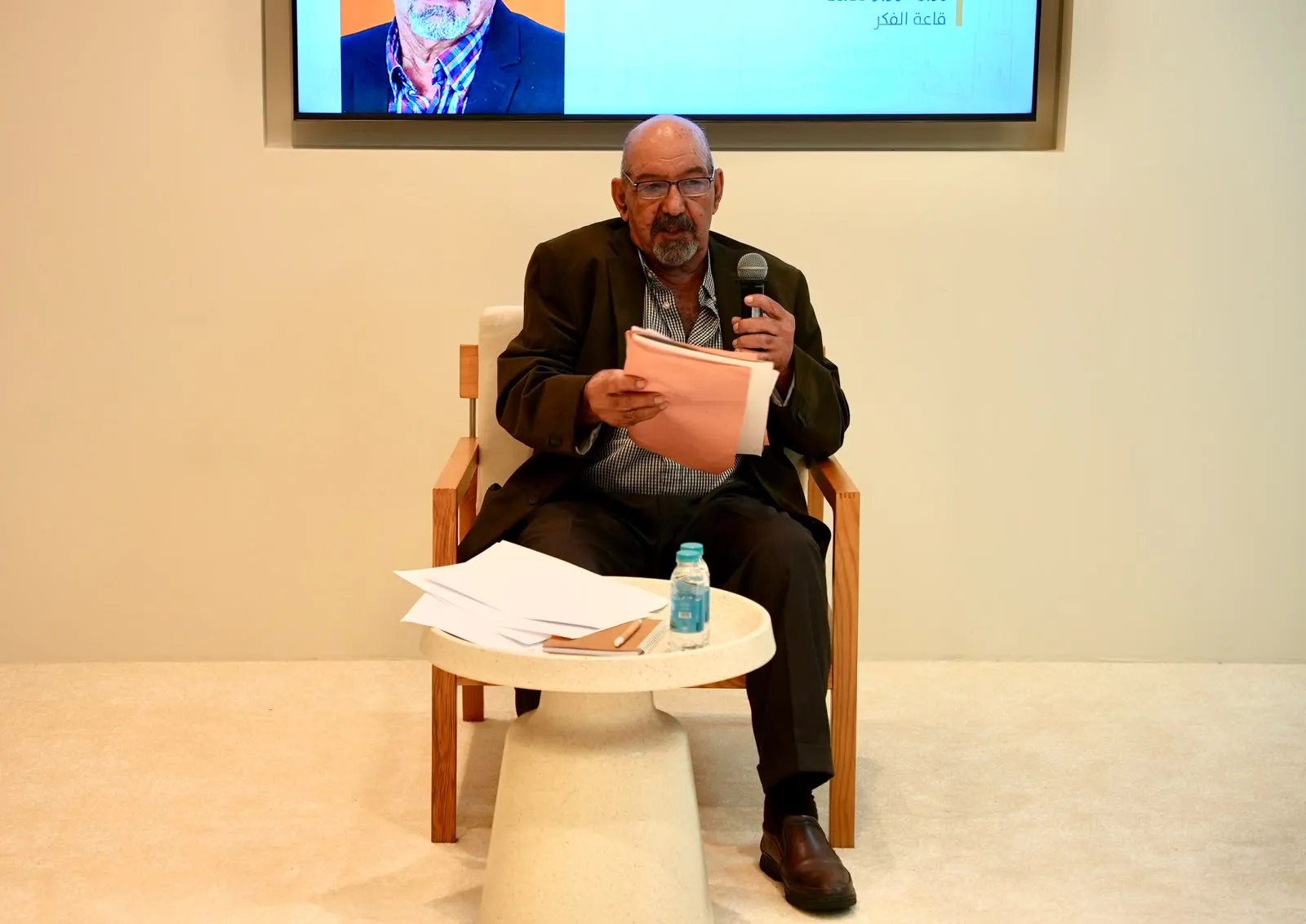
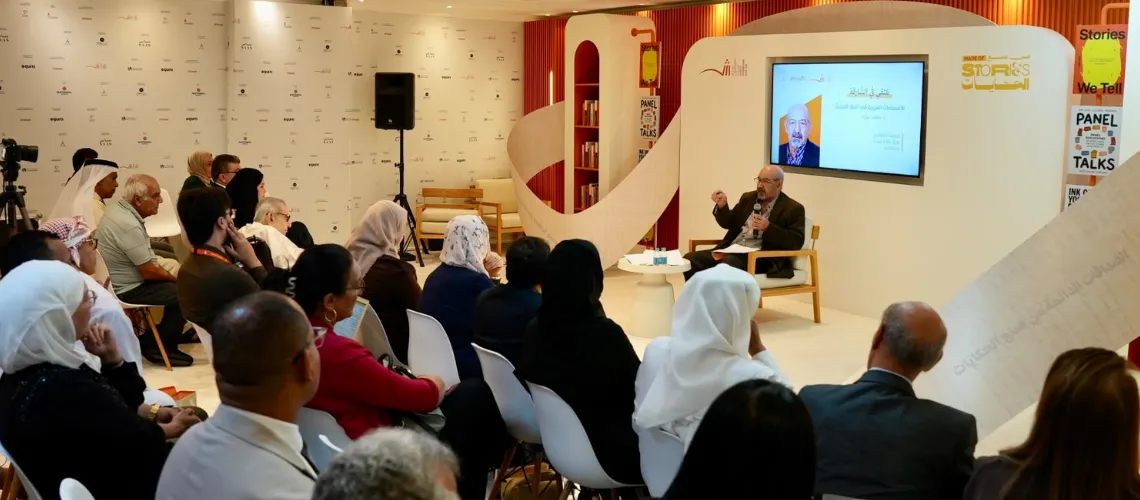
Saeed Benkrad during the lecture
Benkrad said the question of the origins of language had formed the basis of various theological interpretations, drawing on the story of Adam and how he was taught the names of objects and living beings. These interpretations extended to beliefs about the language people would speak in the afterlife, including the notion that Arabic alone would be the language of all inhabitants of Paradise, regardless of their ethnic backgrounds.
“The beginnings of our creation coincided with the beginnings of our language. The world came into being through the language that named it. Through language, humanity came to understand the concept of pairing, and through it, too, the distinction between what is permissible and what is forbidden on Earth emerged,” he added.
Benkrad also explored the idea of inheriting language, saying that people inherit language just as they inherit land, family ties, and society’s preconceptions and judgements, citing Umberto Eco, who said: “There is no humanity without society,” nor is there “a being without a language to shelter it.” He noted that Adam and his wife existed within a framework of language that established commands and prohibitions, laying the foundations for the conditions of communal life. He stressed that, for ancient thinkers, language was not merely a means of communication but also a system for organising life.
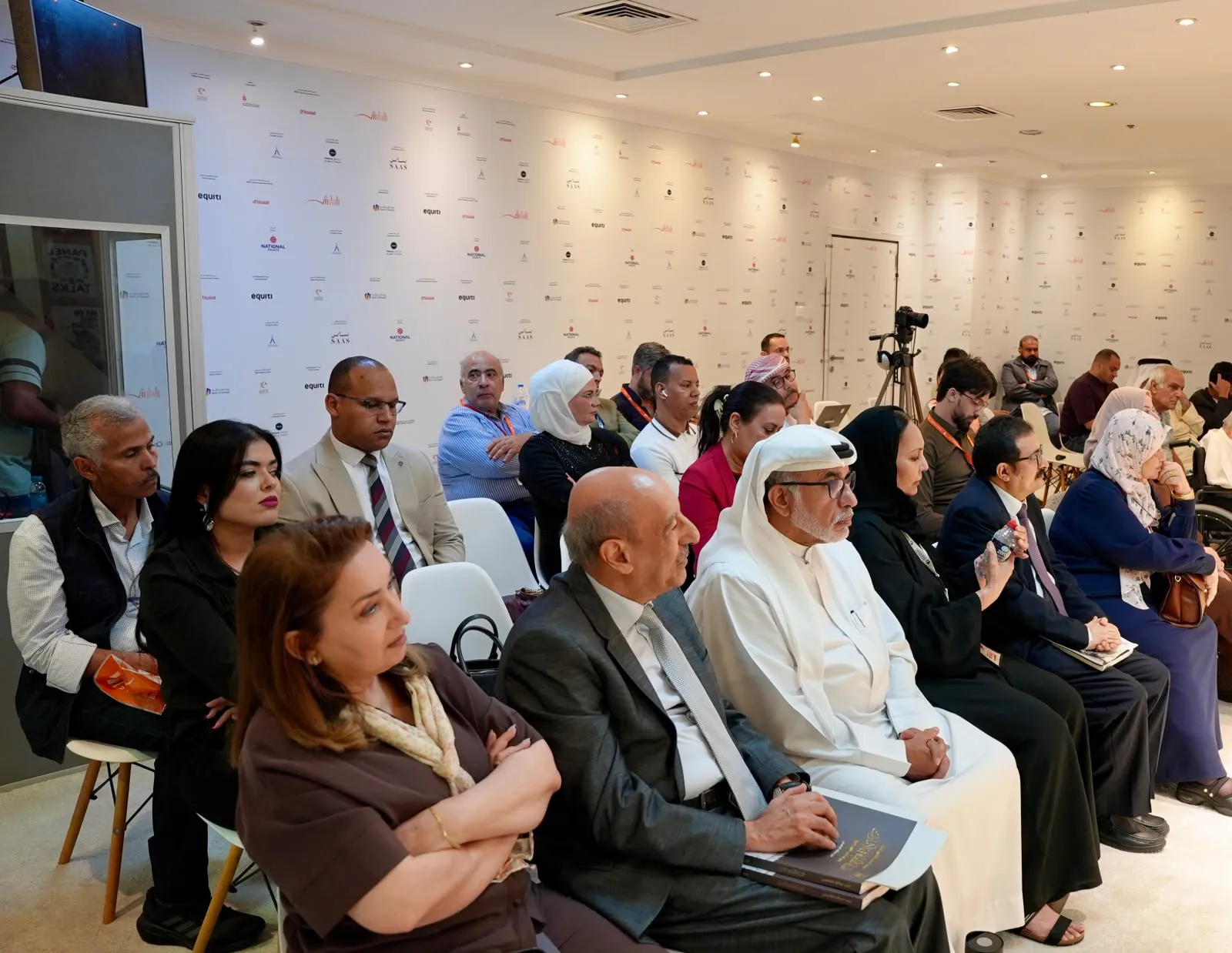
A section of the audience attending the lecture
Concluding his lecture, Benkrad underscored that ancient literary thought, guided by these fundamental principles, had developed a series of concepts relating to texts, interpretation and the understanding and definition of literary phenomena. This, he said, made the Arab literary tradition an integral contributor to modern critical discourse rather than merely a recipient of its ideas.
The lecture concluded with an interactive discussion, during which attendees raised questions about the relationship between classical Arabic rhetoric and semiotics, the role of interpretation in contemporary literary criticism, and the extent to which modern concepts can be applied to the study of Arab literary heritage.