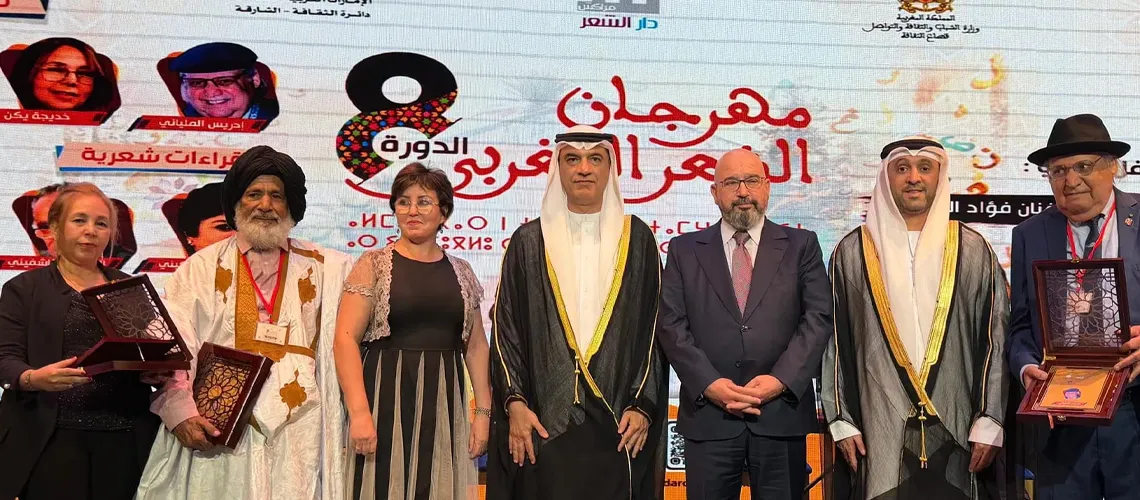
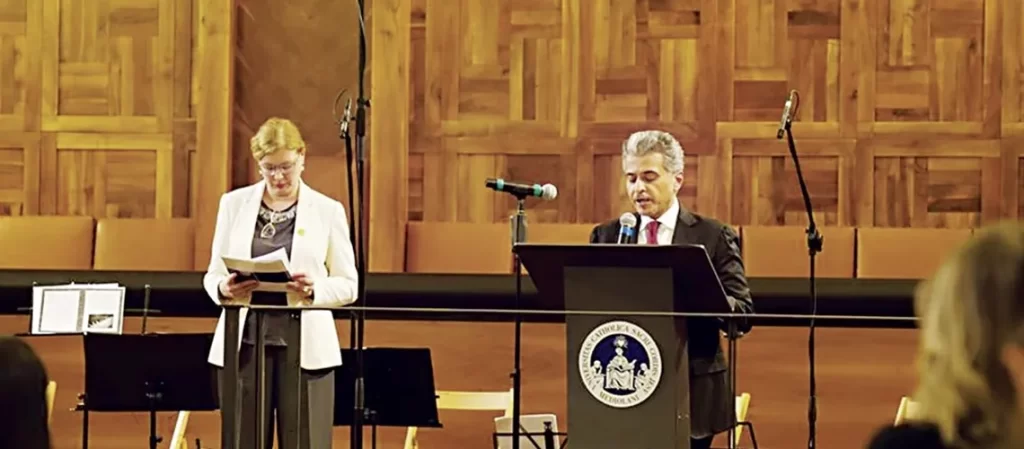
A two-day international festival dedicated to the Arabic language and its cultural legacy has concluded in Italy’s Milan, highlighting the enduring influence of Arabic on European literature and intellectual traditions and reflecting Sharjah’s strong presence in Italy.
The 9th edition of the International Festival of Arabic Language and Culture brought together 24 academics, researchers, translators and writers from 13 Arab and European countries. Held under the theme “The Arabic Weave in the Fabric of European Literature”, the event explored the linguistic, narrative and poetic exchanges that have shaped Mediterranean cultures over centuries.
Organised by the Sharjah Book Authority (SBA) in collaboration with the Arab Cultural Institute and the Research Centre for the Arabic Language at Università Cattolica del Sacro Cuore, the Festival highlighted Sharjah’s expanding cultural presence in Europe and its efforts to promote Arabic within academic and cultural circles.
Ahmed bin Rakkad Al Ameri, CEO of SBA, said the UAE views culture as a cornerstone for dialogue among nations, crediting His Highness Sheikh Dr. Sultan bin Mohammed Al Qasimi, Member of the Supreme Council and Ruler of Sharjah, with advancing a long-standing Arab cultural project that positions books as bridges between civilisations.
He highlighted the leadership role of Sheikha Bodour bint Sultan Al Qasimi, Chairperson of SBA, saying: “Under Sheikha Bodour’s leadership, The authority continues to celebrate Arabic culture’s historical contribution to European literature through translation, intellectual exchange and the presence of Arabic texts in European literary consciousness.
Dr. Mohamed Safi Al Mosteghanemi, Secretary General of the Arabic Language Academy in Sharjah, said the festival’s theme reflects a sophisticated understanding of the relationship between language and culture in Europe. He noted ongoing efforts to build research networks linking orientalists and Arabists, highlighting the tangible imprint of Arabic on European languages through vocabulary, translation and cultural interaction.
Dr. Wael Farouq, Director of the Arab Cultural Institute at Università Cattolica and Director of the Festival, said this year’s edition sought to reassess Arabic’s presence in European culture as a continuous process of mutual influence. He added that the programme aimed to open new academic and cultural space to examine how Arabic has helped shape Europe’s literary memory through storytelling, translation and poetry.
Day 2 of the festival featured a scientific conference with sessions on the role of Arabic in European languages and literatures, including migrant literature and the contributions of orientalists. Panels also examined themes such as legal literature traditions and the influence of “One Thousand and One Nights” on Italian and German literary works.