The Emirate of Sharjah recently hosted an official ceremony in Paris to celebrate the inscription of the Faya Palaeolandscape on the UNESCO World Heritage List — a milestone that adds to the growing legacy of Sharjah, the UAE, and the wider Arab region. Notably, Faya Palaeolandscape was the only Arab nomination considered during the 47th session of the World Heritage Committee, making this recognition even more historic and significant.
The Faya now stands as the second site in the UAE to receive this global recognition after The Cultural Sites in Al Ain that was inscribed in 2011, thus continuing to reinforce the country’s position on the map of human heritage.
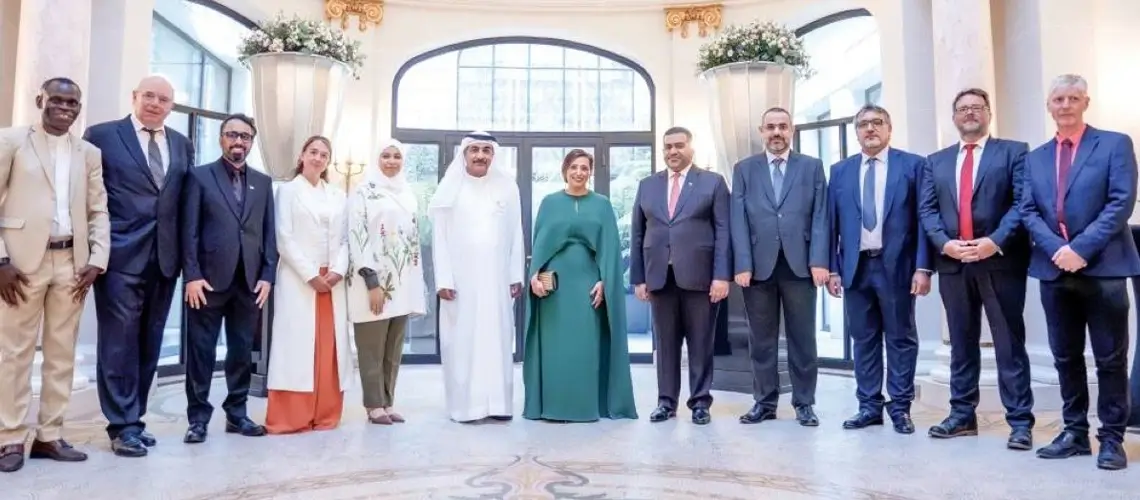
The event brought together a group of the members of the World Heritage Committee, diplomats, and international experts in a collective celebration of this historic achievement that reflects Sharjah’s commitment to safeguarding and preserving human heritage.
Sheikha Bodour bint Sultan Al Qasimi, the official ambassador for Faya’s nomination bid of the (Cultural Scene of Prehistoric Times in Faya), expressed her pride in Sharjah’s continuous efforts to inscribe Faya and bring the site’s instrumental role in shaping early human history to light.
Sharjah’s dedication to preserving Faya’s legacy takes centre stage with UNESCO World Heritage inscription, marking a historic milestone for the UAE and the region. Sheikha Bodour Al Qasimi highlighted the significance of this historic achievement and Sharjah’s commitment to preserving Faya’s legacy for future generations. “The World Heritage List is a collective achievement that we celebrate for Sharjah and for everyone who stood by us throughout this inspiring and valuable journey,” she said.
“This year, Faya was the only Arab nomination considered by the World Heritage Committee. It is now the second site in the UAE to receive this prestigious recognition, following The Cultural Sites of Al Ain in 2011. This is a monumental win for Sharjah, a win for the UAE and nd a win for the entire region,” Sheikha Bodour added.
She also emphasised that Sharjah will remain steadfast in its commitment to preserving and protecting Faya, continue to invest in its conservation, and expand research efforts to ensure that its story reaches and resonates with the entire world.
Ali Alhaj Al Ali, Permanent Delegate of the United Arab Emirates to UNESCO, emphasised the country’s steadfast commitment to heritage and the broader significance of this milestone, stating: “The UAE remains deeply committed to UNESCO’s mission and is proud to stand as an active, engaged partner in preserving our shared global heritage. The World Heritage List is more than a register of sites — it reflects humanity’s diverse stories, values, and identities. It reminds us that heritage knows no borders, and that every culture has something essential to contribute to the global narrative. In this spirit, the inscription of Faya is a step forward in broadening the representation of voices and landscapes from the Arab world and other regions that have long remained on the margins.”
Eisa Yousif, Director-General of Sharjah Archaeology Authority (SAA), expressed his profound appreciation to all those who contributed to making this achievement possible. He underlined the importance of continued collaboration to safeguard Faya’s legacy and its contributions to the understanding of early human history.
“Faya’s inscription is far more than a global recognition of an archaeological site — it is a tribute to decades of unwavering vision and leadership by His Highness Dr. Sheikh Sultan bin Mohammed Al Qasimi, Supreme Council Member and Ruler of Sharjah, who laid the foundations for protecting our cultural heritage and creation of a sustainable environment for serving humanity.” He lauded Sheikha Bodour Al Qasimi’s exceptional stewardship of this nomination, driven by rigorous science and powerful local and international partnerships.
“Faya stands today as a living testament to early human ingenuity and resilience, and it has redrawn our understanding of the Arabian Peninsula — not merely as a passage for migration, but as a true homeland for settlement and creativity. For us at the Sharjah Archaeology Authority, this is a historic milestone that deepens our commitment to preserving and sharing our story with the world. Together, let us make Faya a beacon of knowledge — a symbol of our shared commitment to preserving the heritage of humanity, as we shape a more mindful future rooted in our collective past,” Eisa Yousif added.
The Faya Palaeolandscape is more than a site of historical significance — it is a remarkable testament to the adaptive capacities of early humans who, over 200,000 years ago, endured and thrived in one of the harshest environments on Earth. The archaeological layers uncovered at Faya provide compelling insights into the resilience and ingenuity required to survive in the challenging desert landscapes of the Arabian Peninsula. They affirm that Arabia was not merely a corridor of movement, but a destination — a place where innovation, habitation, and cultural exchange took root and flourished.
More than three decades of archaeological research have revealed 18 distinct layers of human settlement, each narrating a unique chapter in the broader story of human survival and creativity. Faya continues to challenge and enrich our understanding of the past, underscoring the vital importance of preserving such knowledge for future generations.
For the past 11 years, Faya Palaeolandscape has held a prominent place within UNESCO’s Human Evolution, Adaptations, Dispersals and Social Developments (HEADS) Programme, alongside globally renowned sites such as the Klasies River Caves and Wonderwerk Cave in Africa. This long-standing collaboration highlights Faya’s significance in advancing international research in palaeoanthropology and environmental studies, as well as in strengthening international cooperation on global cultural heritage preservation.