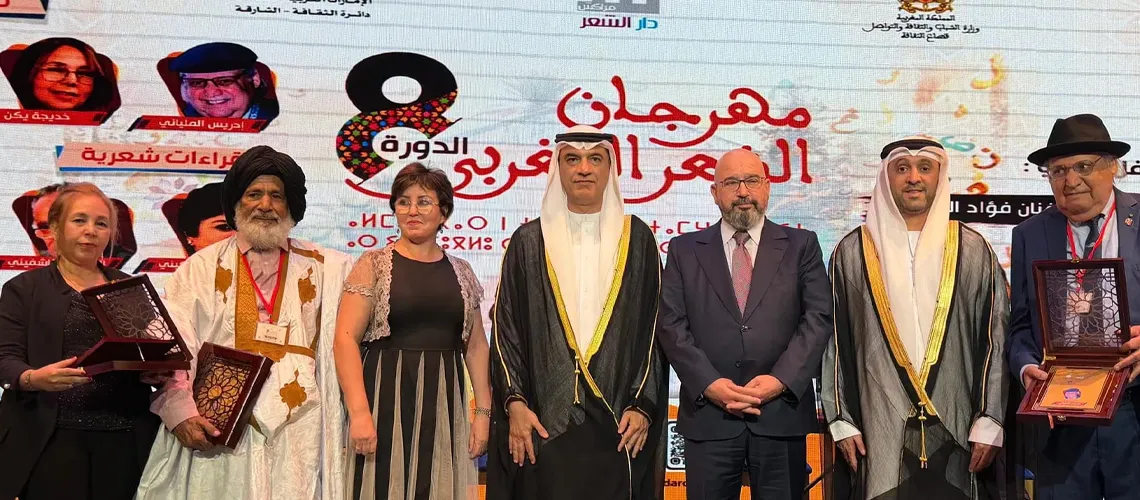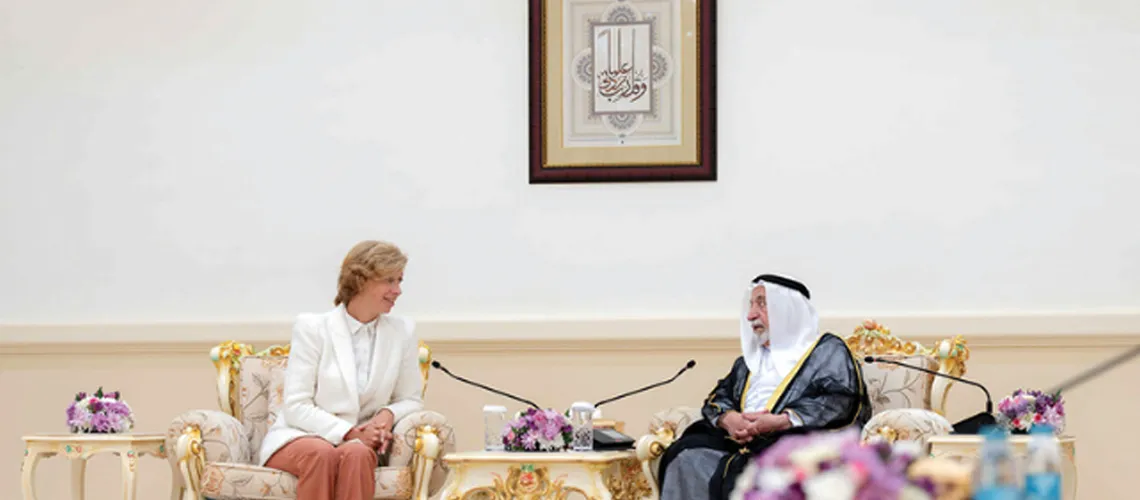

the patronage of H.H. Sheikh Abdullah bin Zayed Al Nahyan, Deputy Prime Minister and Minister of Foreign Affairs, the Sultan Bin Ali Al Owais Cultural Foundation, in collaboration with the United Nations Educational, Scientific and Cultural Organization (UNESCO), will host a major international symposium titled “Sultan Al Owais… A Journey of Poetry… A Journey of Giving”.
The symposium is part of a series of events commemorating the centenary of Emirati poet Sultan Bin Ali Al Owais (1925–2025) and will take place on 11–12 September 2025 at UNESCO Headquarters in Paris.
Spanning two days, the event is one of the key highlights of the centenary celebrations and aims to shed light on the late Emirati poet’s enduring literary and cultural legacy.
An esteemed group of researchers, writers, poets, and orientalists from across the globe will take part. The first day’s speakers include: Dr Barbara Michalak (Poland), Dr Alawi Al Hashimi (Bahrain), Dr Isabella Camera (Italy), Dr Stefan Weidner (Germany), and Dr Boutros Al Hallaq (France), along with Abdul Ghaffar Hussain, Dr Fatima Al Sayegh, Dr Youssef Al Hasan, and Abdul Hamid Ahmad from the UAE.
The second day will feature contributions from Dr Shawqi Abdul Amir, Dr Benedict Lautier (France), Dr Suleiman Al Jassim, Dr Abdulkhaliq Abdullah, and Professor Ibrahim Al Hashmi (UAE), in addition to Dr Ali Jaafar Al Allaq (Iraq), poet Shawqi Bazei (Lebanon), poet Karim Matouq (UAE), and poet Hussein Darwich (Syria).
On the sidelines of the symposium, the Al Owais Foundation will present an art exhibition titled “Words Breathing Beauty,” inspired by the poet’s persona and work. A parallel book exhibition will showcase the Foundation’s publications for the centenary, including French translations of Al Owais’s poetry.
The symposium will open with a short documentary on the life of Sultan Al Owais, followed by a musical performance by artist Fawaz Baqir and the Eastern Takht ensemble, featuring traditional Eastern compositions.
UNESCO officially designated 2025 as the year to commemorate the centenary of Sultan Bin Ali Al Owais, following a detailed review of his achievements, submitted by the UAE National Commission for Education, Culture and Science during the 42nd session of UNESCO’s General Conference.
The centennial celebrations encompass a wide range of cultural activities, including art exhibitions, documentary screenings, musical performances, reprints of poetry collections, the publication of illustrated books and stamps, commemorative coins, and other events honouring this influential Emirati poet whose legacy continues to enrich local and Arab culture.
One of Sultan Al Owais’s most enduring contributions to Arab cultural life is the establishment, in 1987, of a prestigious literary award bearing his name. Presented biennially, the award recognises Arab writers and intellectuals across various fields—short story, novel, drama, poetry, literary studies and criticism, humanitarian studies, and future studies—provided the nominated works reflect the authenticity of Arab thought and the aspirations of the Arab nation.
Born in 1925 in the town of Al Hira in the Emirate of Sharjah, Sultan Bin Ali Al Owais received his early education there. He came from a family of pearl merchants with strong commercial ties, gaining hands-on experience by working alongside his father in the pearl trade and travelling frequently between India and the UAE.
Al Owais began writing poetry in 1947, although his first published work appeared in Al Woroud magazine in Beirut in 1970. Known for the emotional depth of his poetry, he began systematically compiling his works later in life, earning a prominent place among Emirati poets and serving as a bridge between literary generations.
A towering figure in Gulf poetry, his works continue to resonate with audiences across diverse backgrounds. His first poetry collection was published in 1978 by Al Ittihad Press, Publishing and Distribution Corporation. Among his most celebrated works is “Mirrors of the Gulf” (Beirut, 1985), followed by “Diwan Sultan Al Owais: The Complete Collection” in 1993.
According to literary scholars, Al Owais is classified as part of the second generation of poets from Al Hira, alongside Sheikh Saqr Qasimi (1924–1994) and Khalfan bin Musbah (1923–1946).